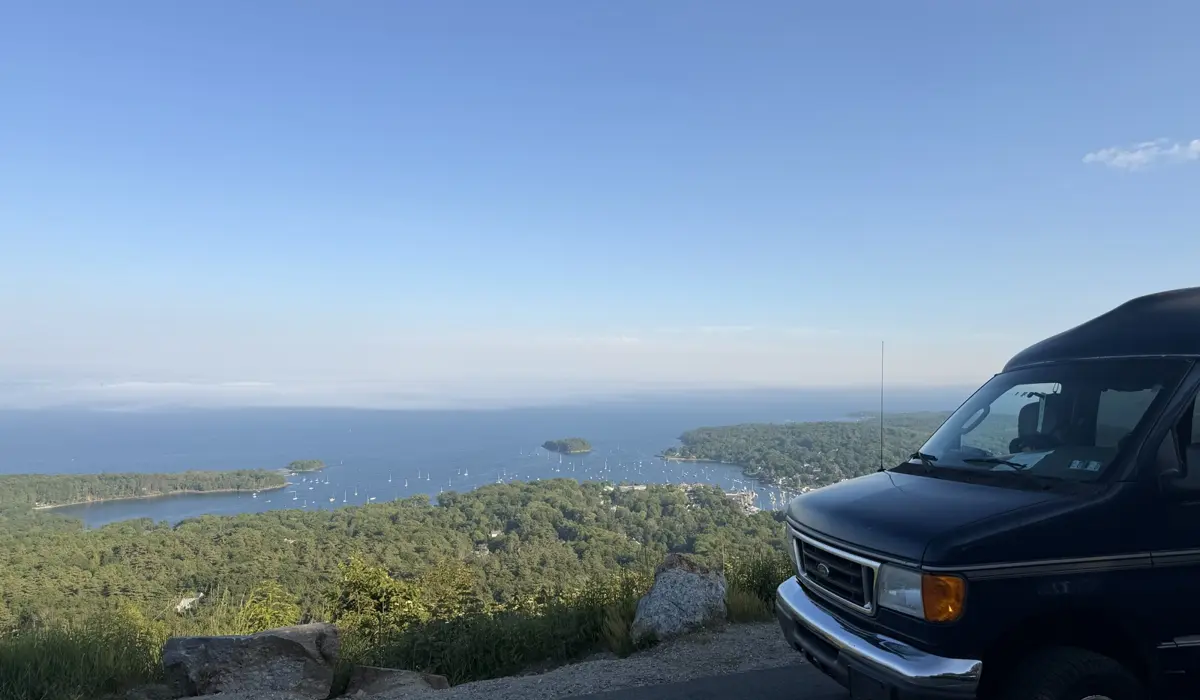
Three months and a few thousand kilometres of East Coast, and the four things that got built along the way.
The van made the trip cheap. The agents made it productive. This post is about what actually came out of it: the places, and the products the places produced. Because almost everything I shipped these three months traces back to a specific moment on the road where something was annoying enough to fix.
The map
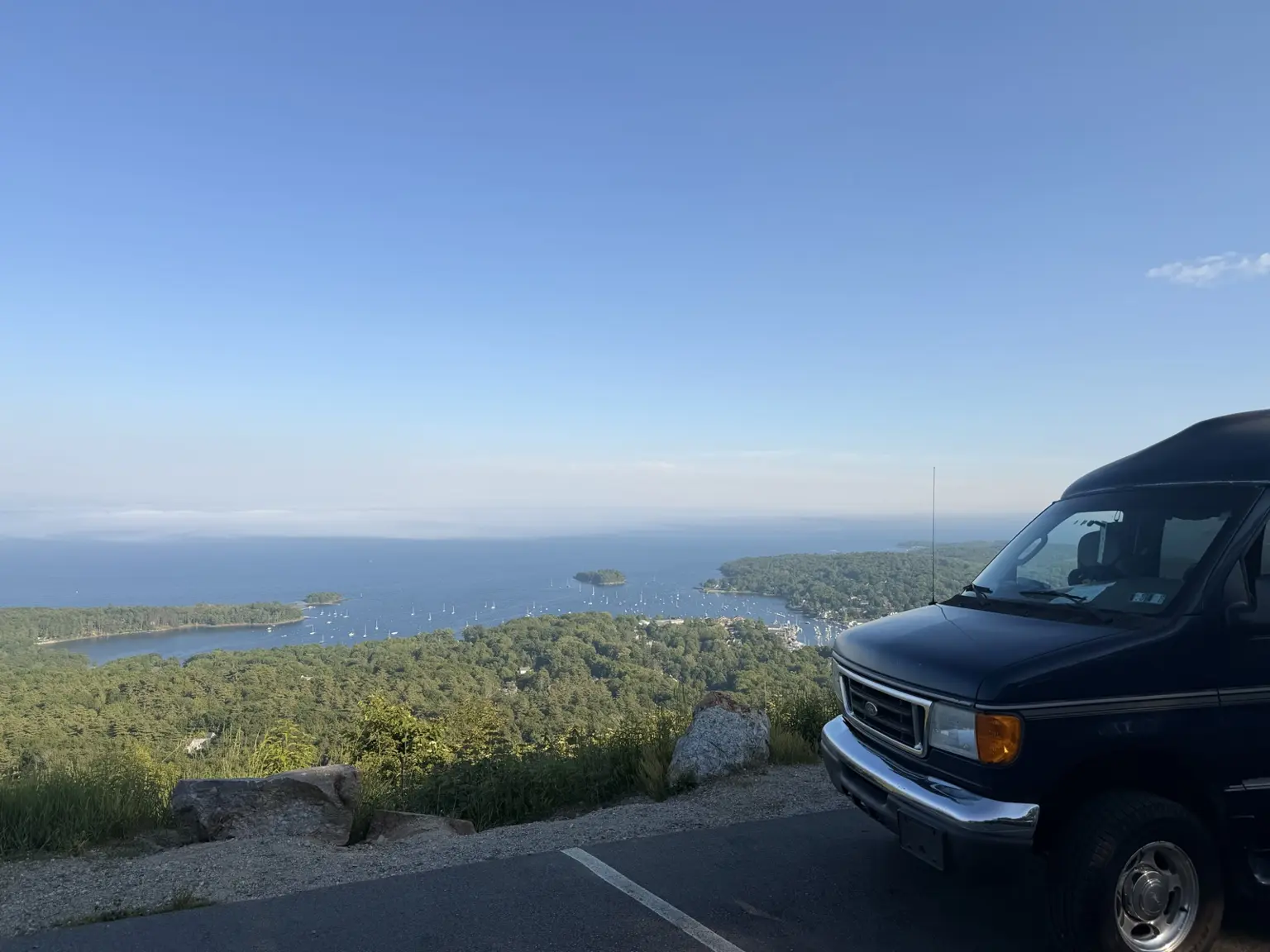
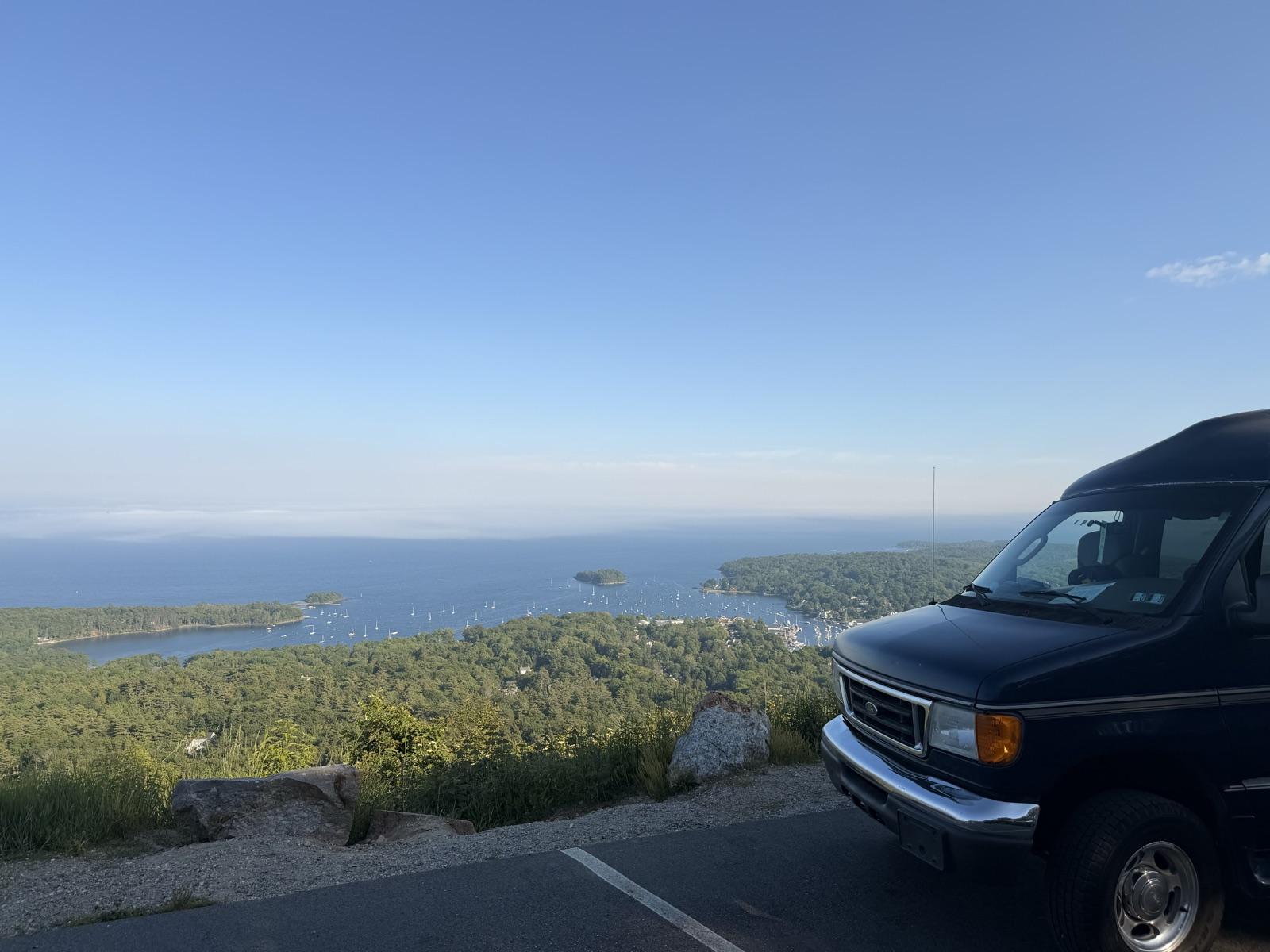
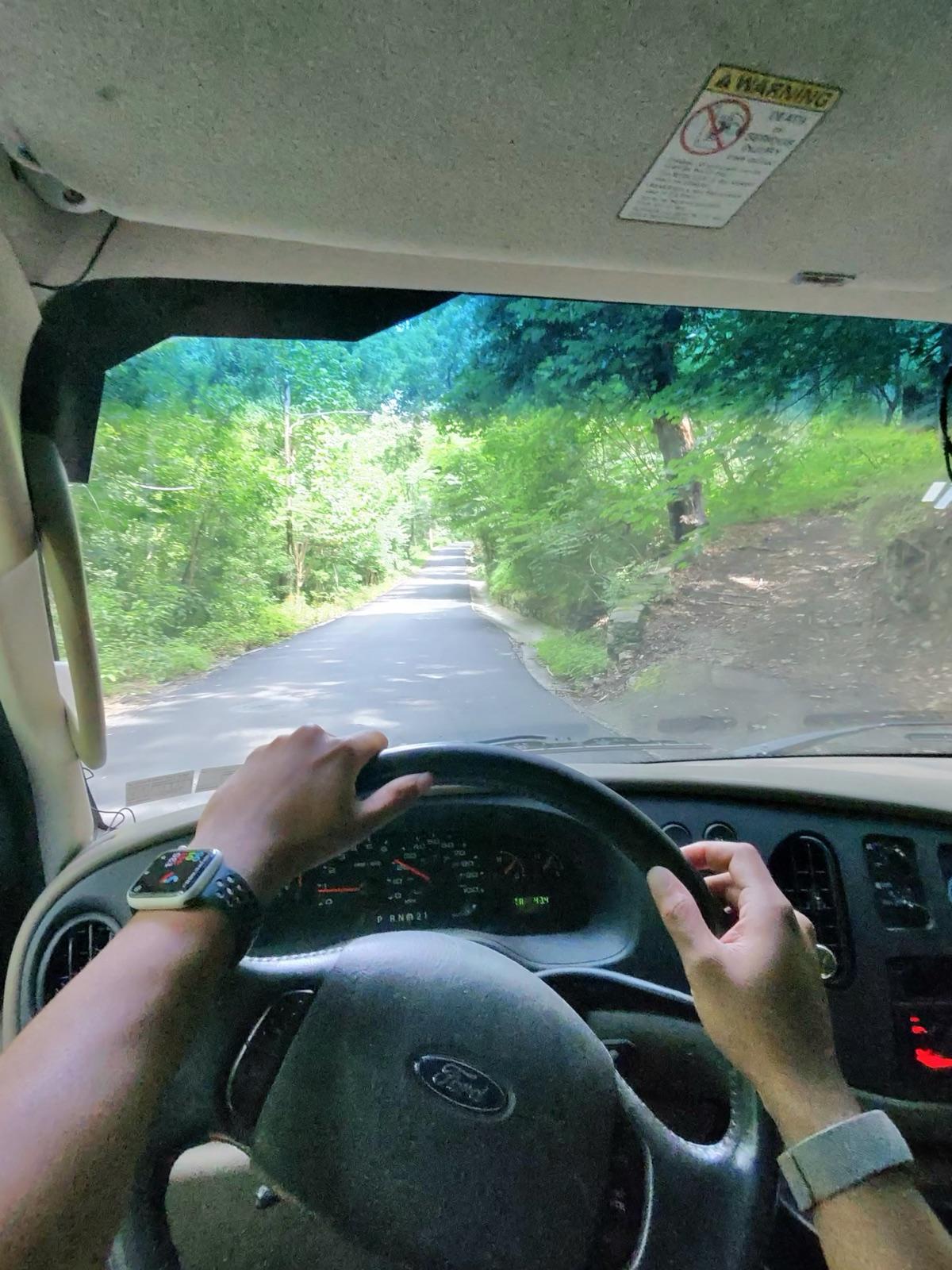
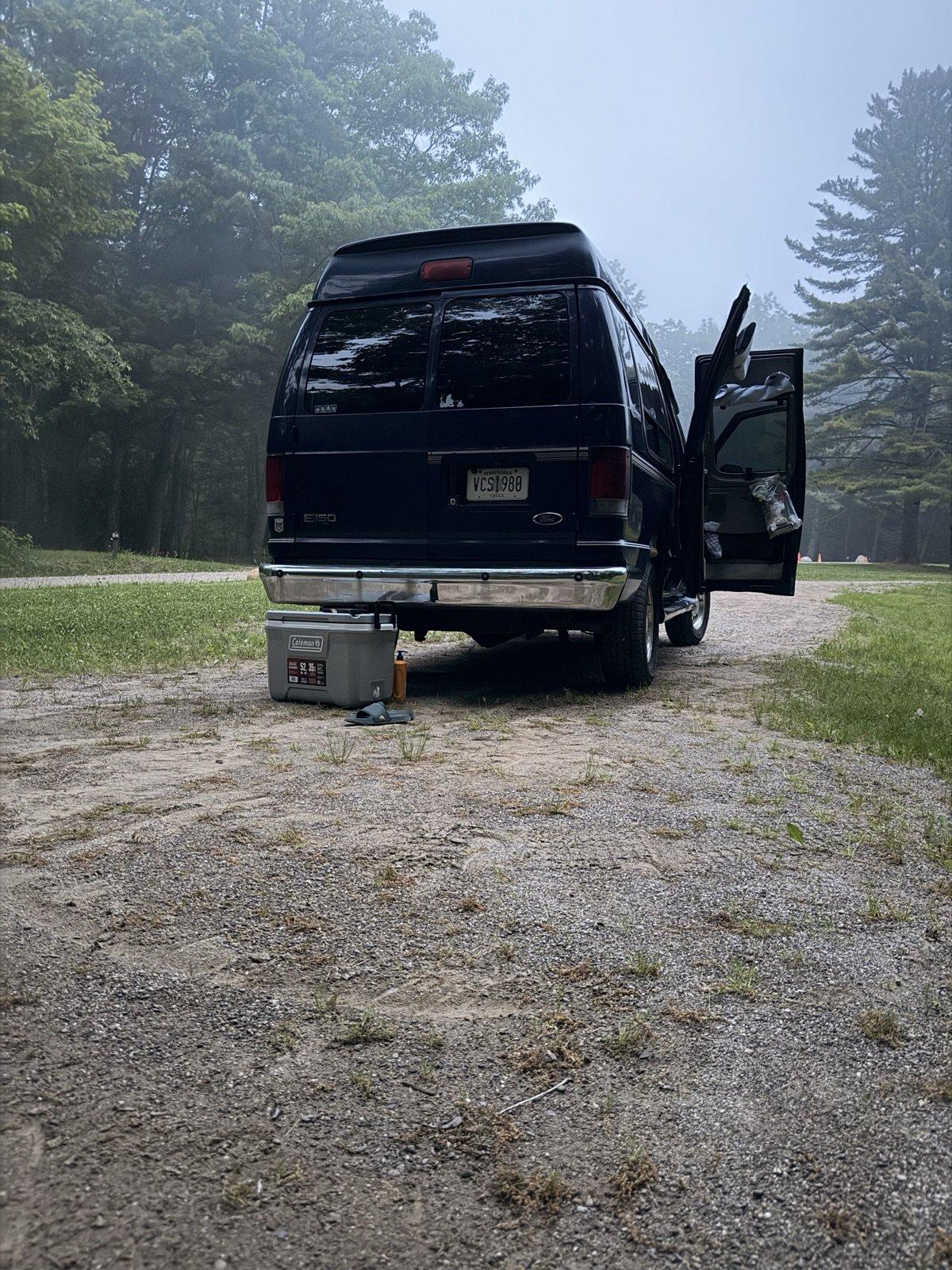
From the Philadelphia starting line the van covered Washington DC, Shenandoah, the suburbs of New York and New Jersey, upstate New York, Niagara Falls, and then two weeks in Maine exploring Acadia and Camden Hills. The best of it was never the landmarks. It was the in-between: the ridiculous, underrated beauty of East Coast nature, and the rural towns you only see because a van does not care where it sleeps.
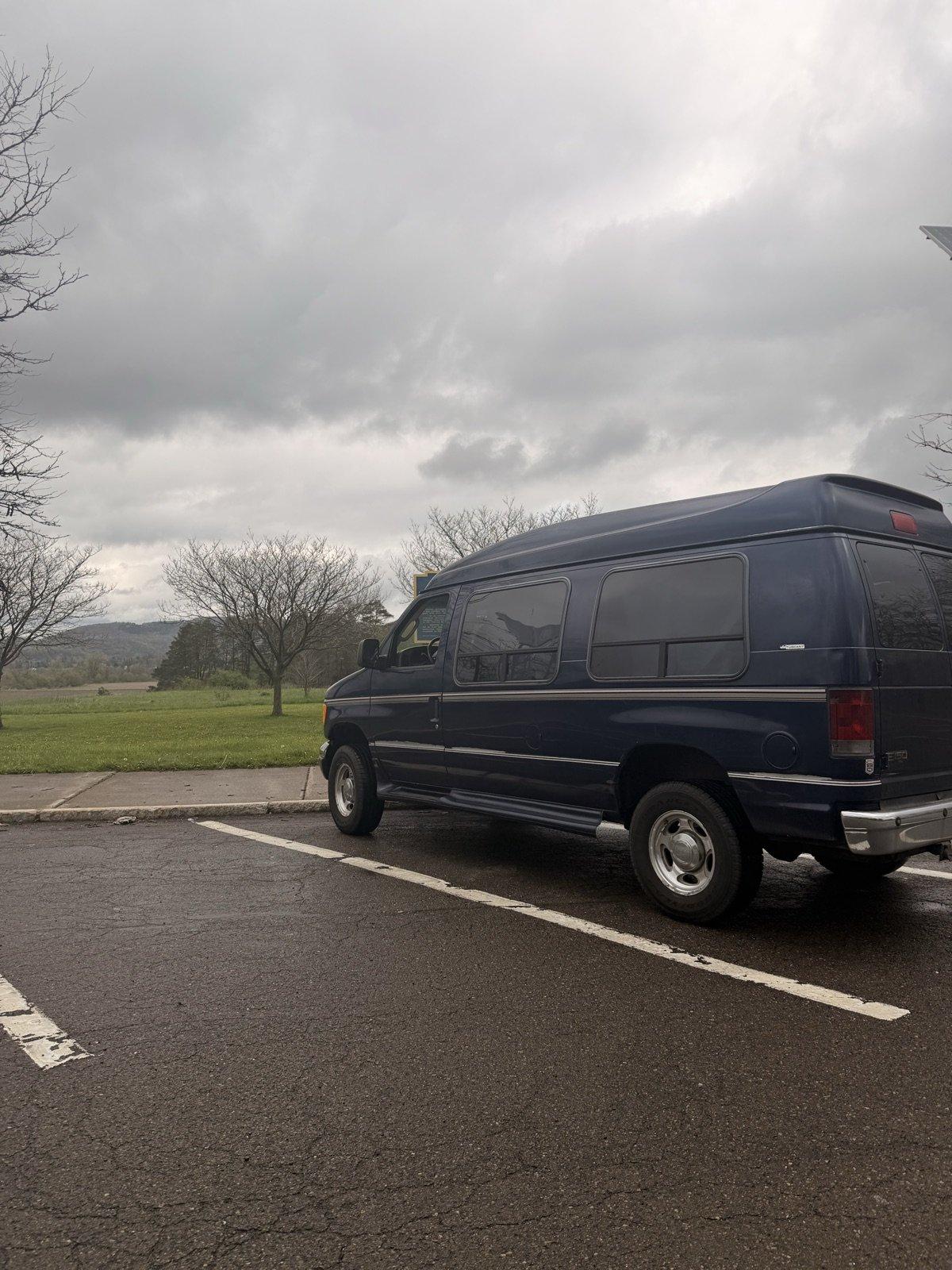
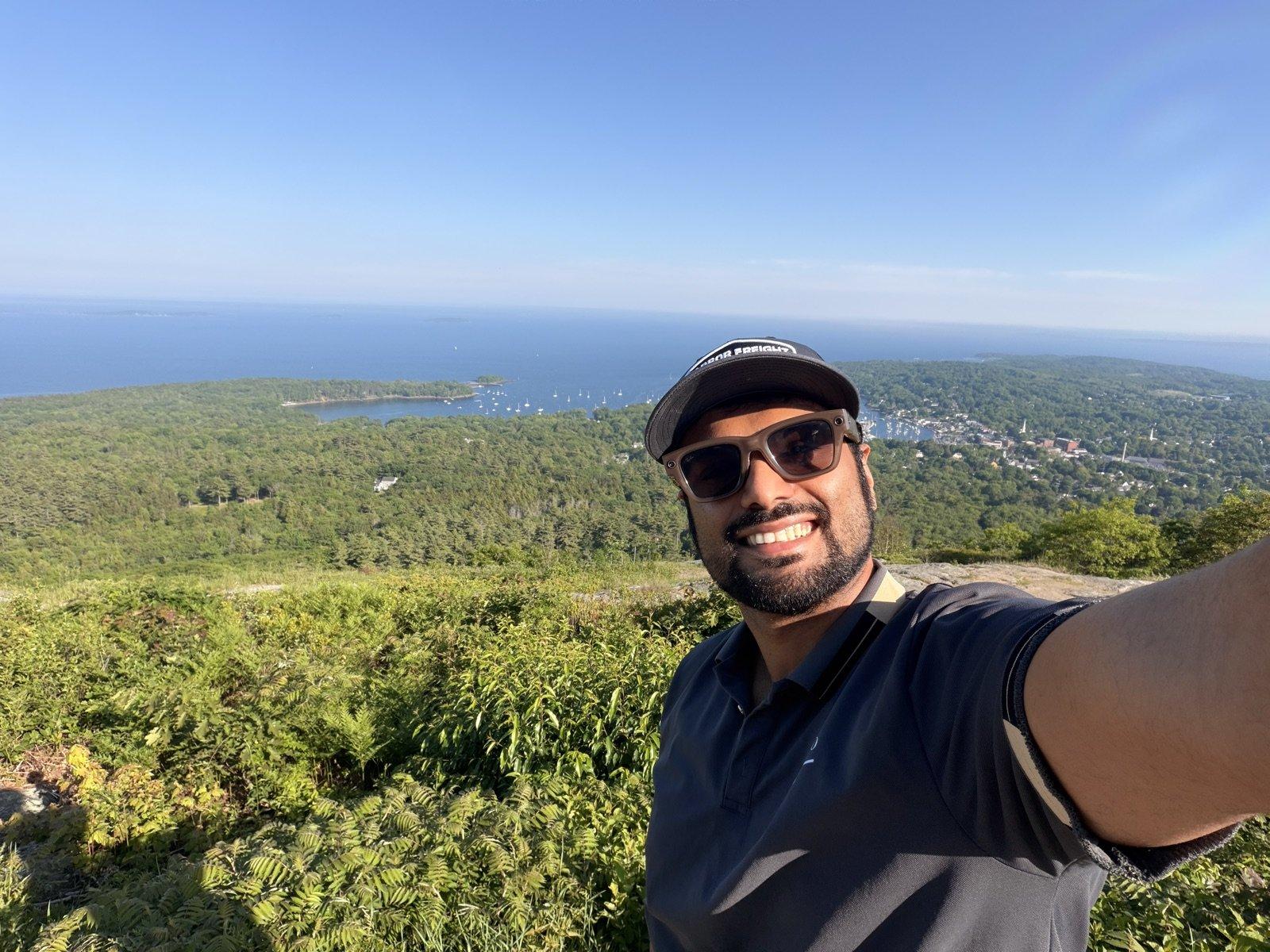
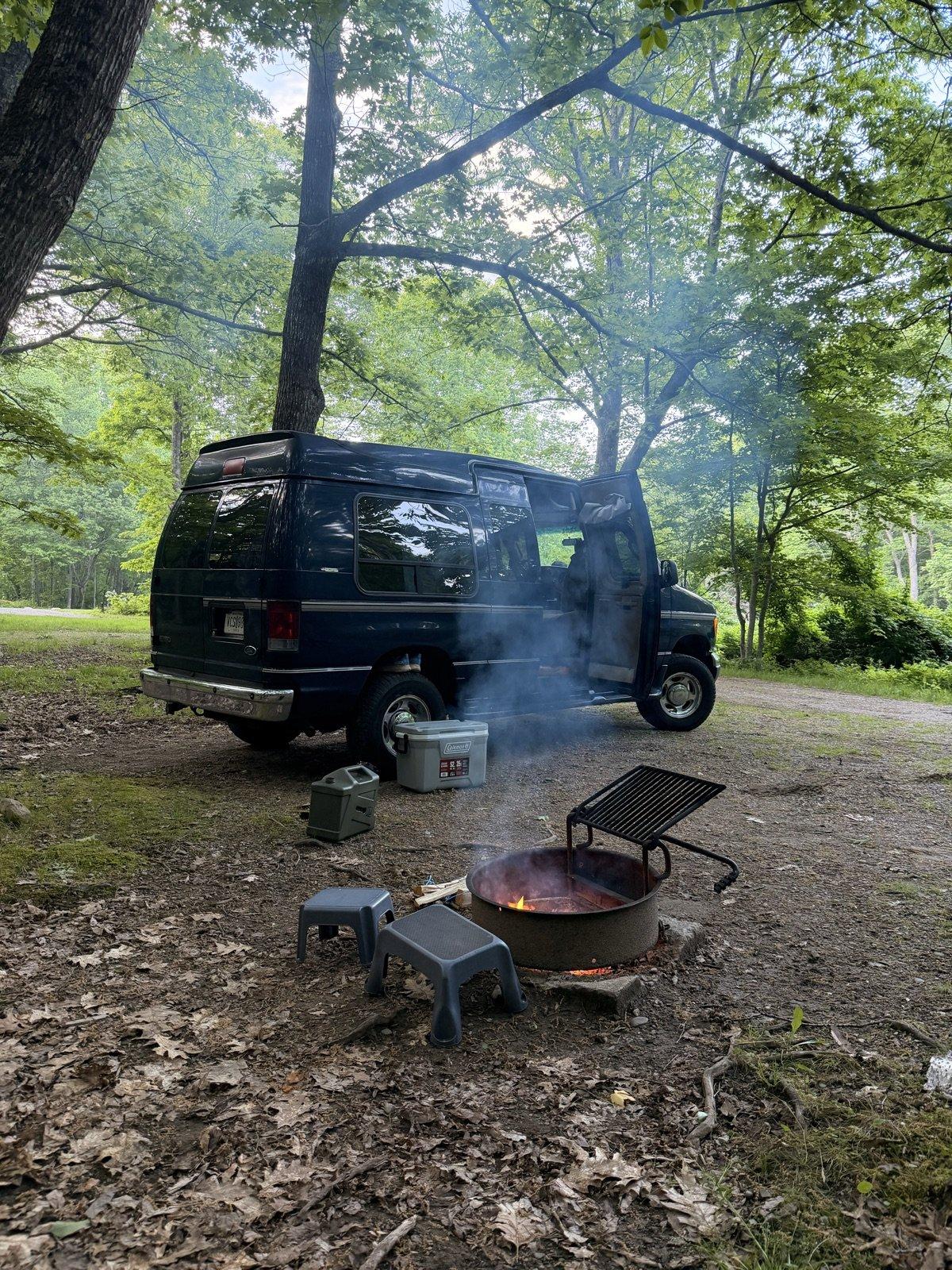
It was not all postcards. The van has no exhaust fan, and when a heatwave parked itself over the coast, sleeping in a metal box became genuinely tricky; those weeks, the agents earned their keep booking flights and finding cheap rooms instead of overnight spots.
The bill (so far)
Since this whole experiment started as a maths problem, here is where the maths stands. Every expense of the trip, logged as it happened:
| Category | Total |
|---|---|
| Van (a 2007 Ford Econoline E-150, plus registration) | $3,915 |
| Build and gear (Starlink kit, solar, fridge, tools, everything) | $2,236 |
| Food and groceries | $1,386 |
| Buses, tolls, phone plans, subscriptions and the rest | $1,146 |
| Fuel | $569 |
| Sleep (parking, campgrounds, the occasional room) | $439 |
| Maintenance | $160 |
| Activities | $146 |
| Total, day 1 to day 80 | ~$10,000 |
A few things jump out of that table. The van and everything bolted into it come to about $6,150, and most of that walks back out as resale value when the trip ends. The actual running cost of the life itself, the food and fuel and sleeping and everything else, lands around $48 a day. For calibration: the cheapest acceptable city bed I found all trip was $79 a night, and my one weak-moment room in July was $150. The entire day of van life, meals included, costs less than the bed alone would have. The spreadsheet-shaped fright from week one turned out to be a good instinct.
Built on the road
pingintro (pingintro.com) exists because of tech week. Meeting dozens of people a day means accumulating a pocketful of business cards you will never look at again. So I built something for myself: it OCRs a card and saves the person straight into my phone contacts, and it generates a pass for my Apple Wallet that anyone can scan to get my links and details. I showed it to a few people at events; enough of them asked whether I could make one for them that it became a real product with an iOS app. It has made my life noticeably easier, and now it is doing the same for others.
Sidekick (sidekick.flowsxr.com) came from conversations with tradies I met along the way. The pattern was always the same: workers in the field hit a problem, and the answer lives either in a manual nobody carries or in the head of an expert who is somewhere else. Sidekick lets a plumbing company, an electrical firm, or anyone really, create specific AI profiles that answer on camera glasses or any camera-equipped device. The worker asks, the AI answers with full view of what they are looking at, and when the AI is not enough, the call escalates to a human expert in that domain who receives the live video feed and the full context. This one feels different from the others: it is a natural extension of my PhD and the remote-collaboration research I have been doing for the last ten years, finally cheap enough and wearable enough to put on a job site.
TalkShot (talkshot.work) is a smaller tool with an outsized effect on my day: it lets me annotate what I am looking at and speak to my agents about it, instead of endlessly typing descriptions of things the agent could just see.
OpenMontage (github.com/calesthio/OpenMontage) is the open-source one: an orchestration layer for editing videos with AI, which I contribute to. The road generates a lot of footage, and I had both the itch and, for once, the time.
The feedback I did not see coming
Showing demos at tech week produced the kind of feedback you cannot buy. The one that stuck came from an ex-SpaceX employee, who watched the glasses capture and analyse what I was looking at and said: a camera like this, watching a repair procedure, could catch a fault before the failure happens, and that could save enormous money. Predictive maintenance through a technician's own eyes. It had genuinely never occurred to me, and I am yet to reach out to SpaceX about it, but it sits near the top of the list.
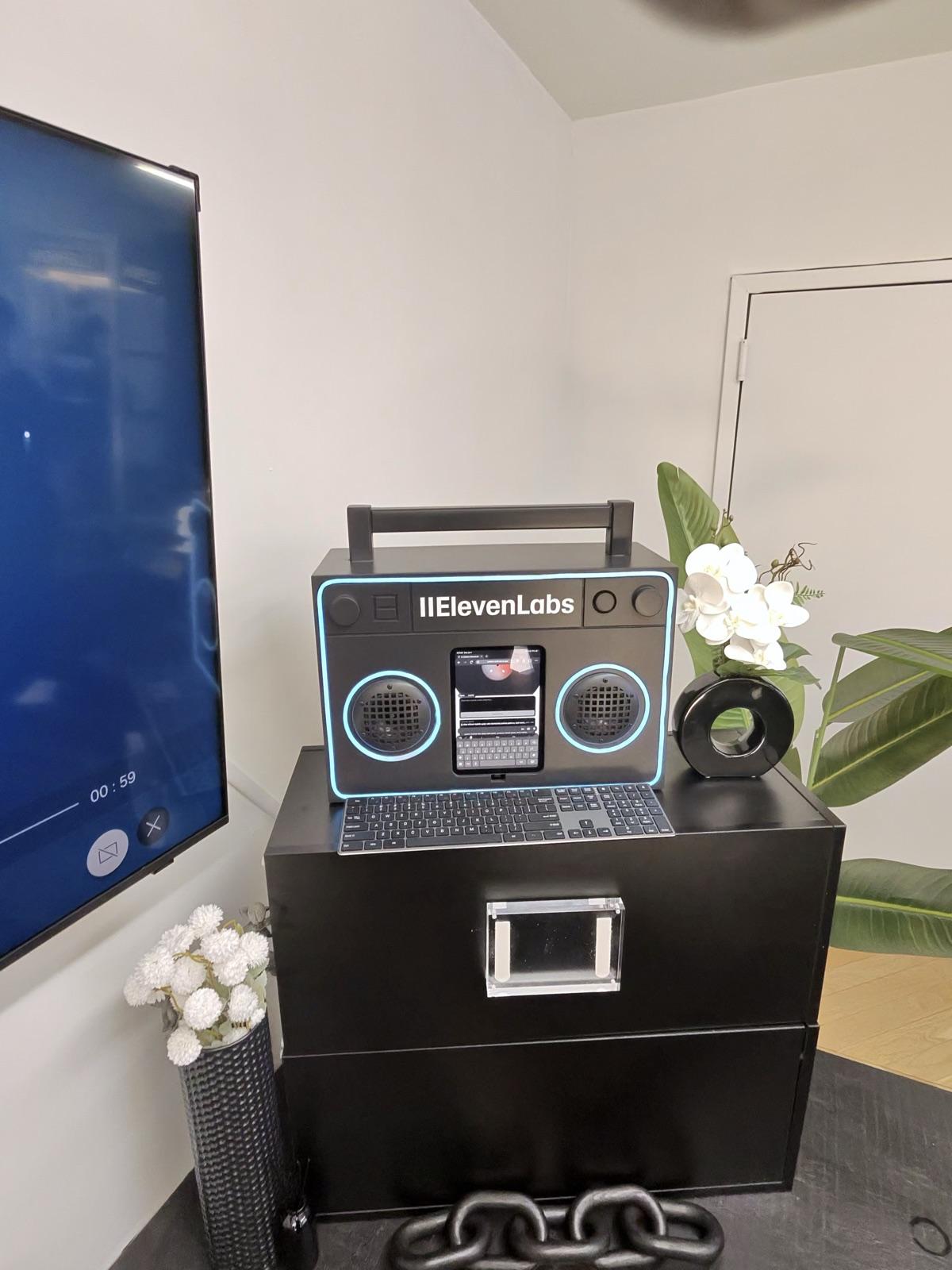
Some of the feedback came with funding attached: at the ElevenLabs booth I picked up a startup grant worth around $4,000, which for a company this young is not nothing.
The 5x lesson
Here is the takeaway I keep coming back to. Over these three months I got roughly five times as much done as I normally would, and I enjoyed the trip the entire time. Not because I worked harder; because the agents were always available, always with me, and always doing things while I was doing other things. The van drove through Shenandoah while a project scaffolded itself. I hiked Acadia while the follow-up emails queued themselves up.
The phone could do most of this, technically. But the phone demands presence: take it out, look at it, leave the moment. The glasses let the work happen inside the life, instead of the life pausing for the work. That difference is small to describe and enormous to live, and it is the clearest validation of the company's direction I could have asked for. The honest counterweight from the last post still stands: the tech hangs, the loneliness is real, and none of this replaces people. But the trade was worth it.
And if you would rather watch the three months than read them, here they are in three minutes: