The agent stack that ran my working life from a van, and the honest downsides nobody puts in the demo video.
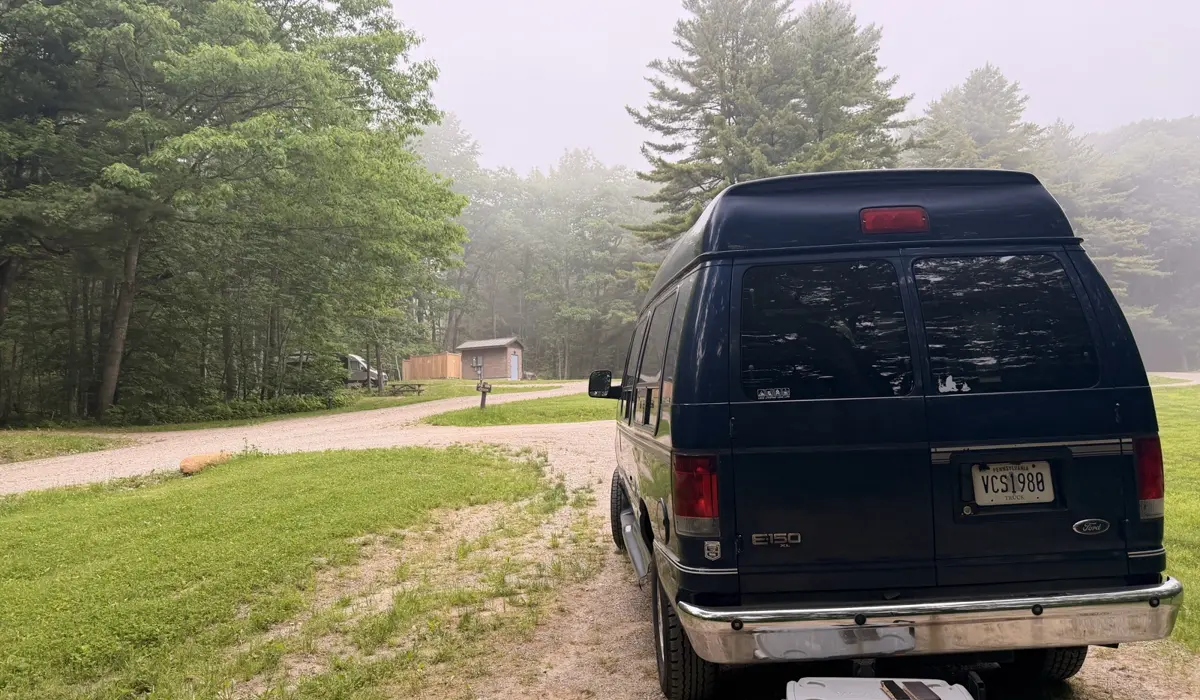
People ask how much work you can realistically get done living out of a van. The honest answer is: more than I get done at a desk, and the reason is not discipline. It is that most of my working life now runs through agents, and agents do not care whether I am in an office or a Walmart car park in Pennsylvania. On a normal day I have somewhere north of thirty interactions with them; on a busy day, far more.
The stack
The core concept is simple: one agent that is always reachable, and one that is powerful when I am at the laptop.
The always-reachable one is a Hermes agent running on a VPS. I talk to it over WhatsApp or Telegram, and over time it has learned how I like things done. It is the remote brain: when I am driving, hiking, shopping or otherwise away from a keyboard, everything goes through it.
The heavy lifter lives on the laptop: another Hermes agent alongside OpenClaw, which between them handle the real work of building applications, compiling them, and running them. When the laptop is open, that pair is what I lean on. When it is closed, the VPS agent holds the fort.
On top of both sits the glasses application I built, which is the whole reason my company exists: it lets me talk to the agents while driving, hiking, walking, or mid-set at the gym, without touching a phone. Here is what that looks like from inside the glasses, rolling through Philadelphia and asking about Wissahickon Valley Park:
I shared this demo on r/SideProject, and the comments turned into exactly the kind of feedback loop this trip kept producing.
The model plumbing underneath is deliberately mixed. I have the $100 Claude plan and sometimes blow through the usage window, so Claude does orchestration while GLM 5.2 picks up the small tasks. DeepSeek powers most of the agentic work inside Hermes and OpenClaw, and an OpenRouter API key lets me switch providers freely when I am building things. A Cursor hackathon I took part in threw in some credits, which helped. The university gives me GitHub Copilot, but it has not been great lately, so it mostly sits unused.
What a day actually looks like
The pattern that changed everything is idea capture. Ideas arrive in the shower, at the gym, halfway up a trail: never at the desk. Now the moment one lands, I send a voice message on WhatsApp and ask the agent to set everything up. By the time I am next at the laptop, the project is scaffolded and waiting, and I start from momentum instead of from a blank folder.
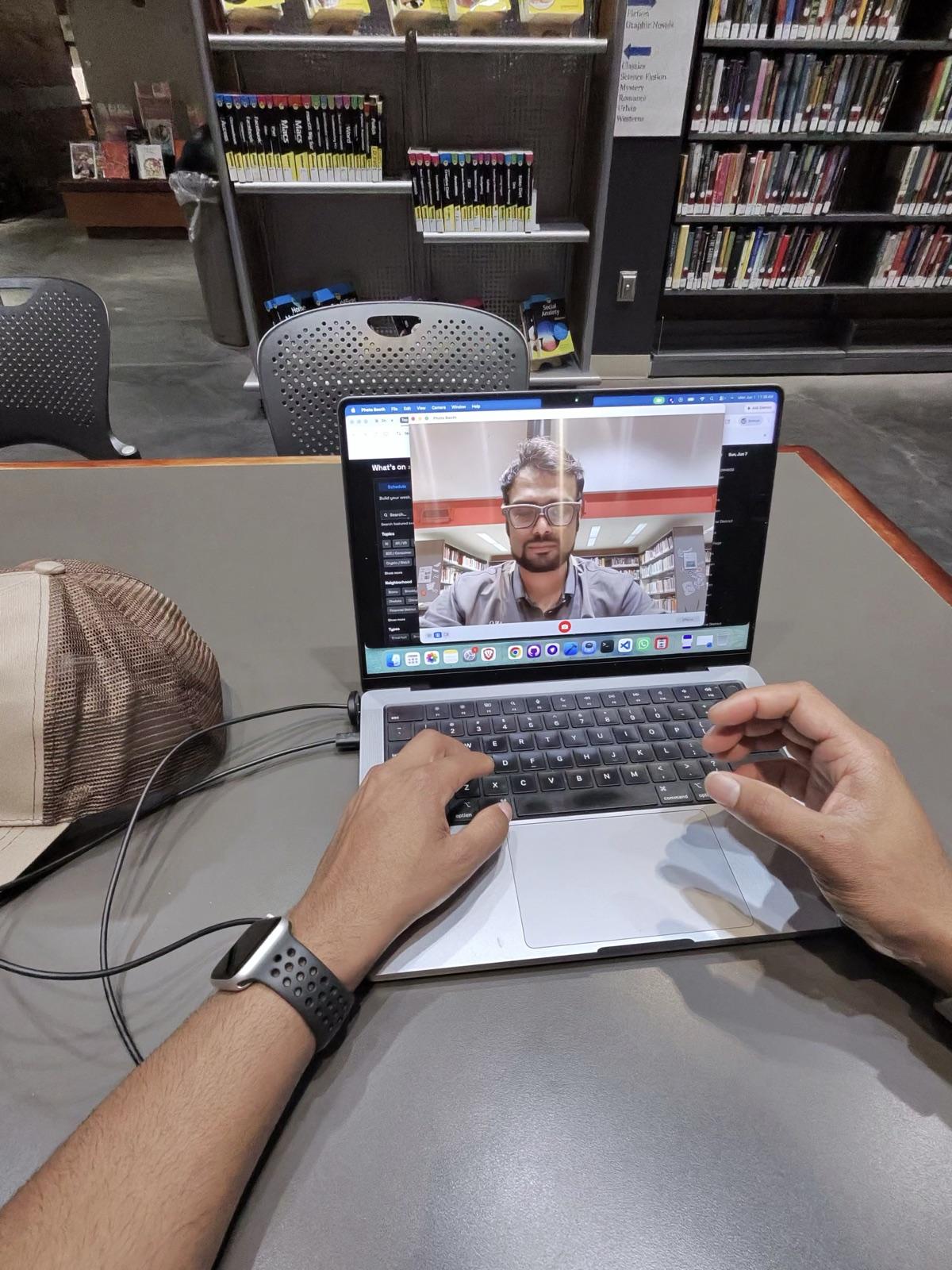
And the laptop opens in a different place every day. Cafés and the van, yes, but the quiet discovery of the trip was public libraries: the East Coast is full of them, they are free, and they are excellent places to work.
The gym setup is my favourite small build of the trip. It is just a webpage, but it is tailored for the glasses: it knows what day it is and what is in my program, and while I train it shows the current exercise, the rep count, and what is next, mirrored to the Apple Watch. No phone, no laminated card, no trying to remember whether it is a push day. I have a video of it working that I still find quietly delightful.
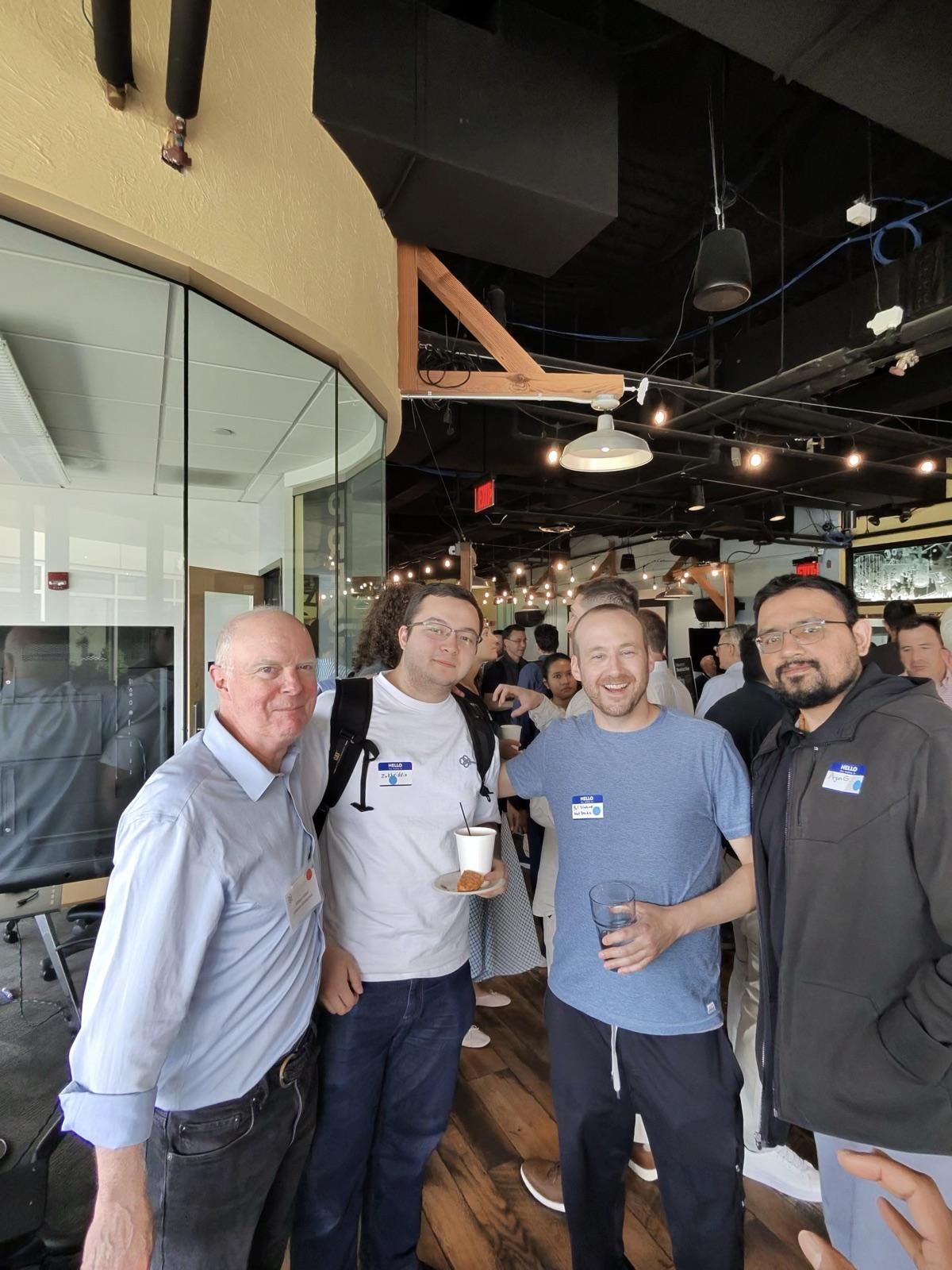
Then there is networking memory. At tech week in Boston and New York I was meeting more people in a day than I can hold in my head. So the ritual became: shake hands, part ways, and immediately speak a note to the agent. Met this person, this is what they do, send them a LinkedIn request. At the end of the day or the week I ask for the list and follow up properly. Nobody falls through the cracks anymore, and the follow-ups happen while the conversation is still warm. Showing demos at those same events cut both ways too: I got sharp feedback and use cases I would never have thought of myself, which reshaped some of what I built later in the trip.
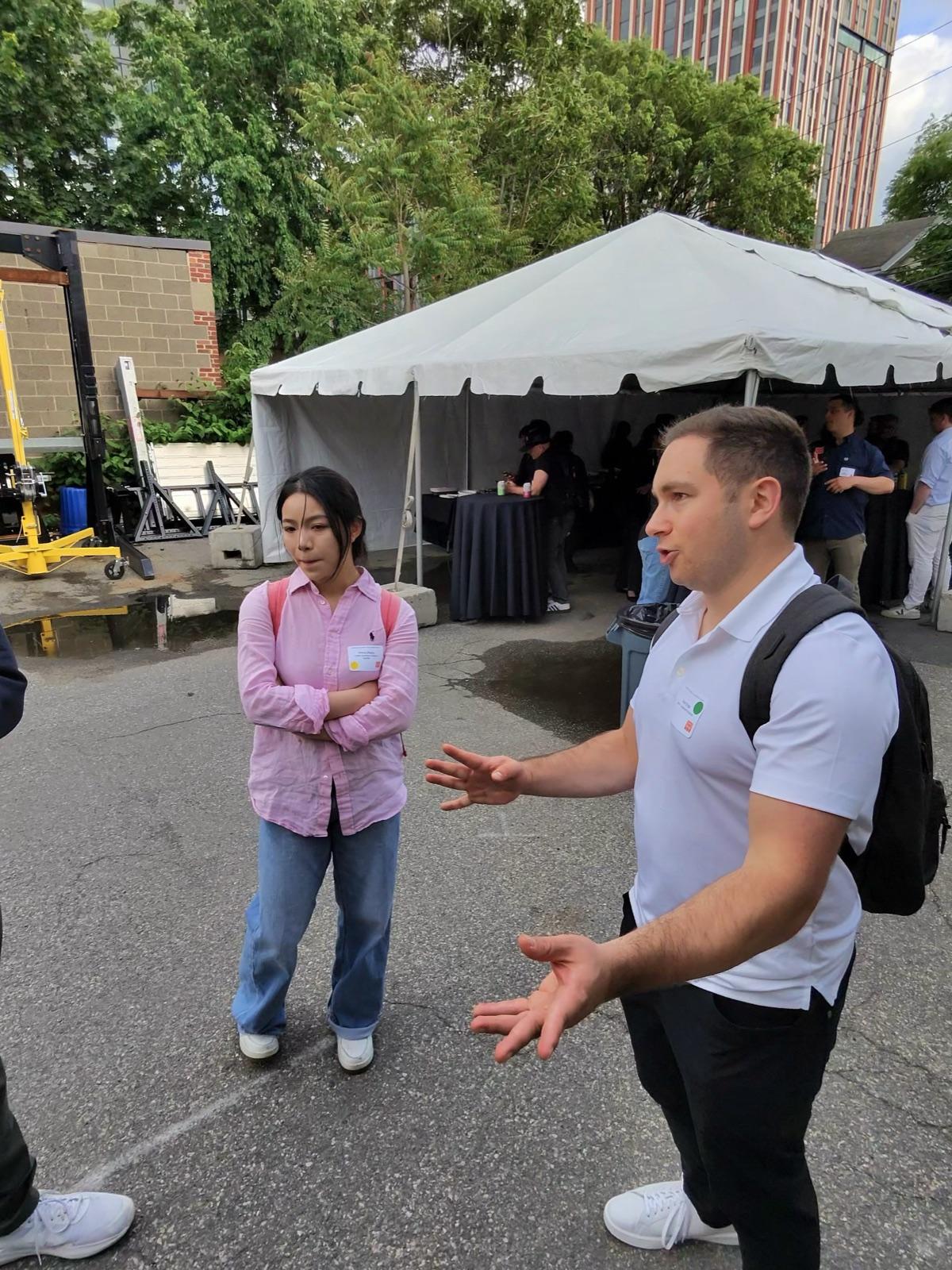
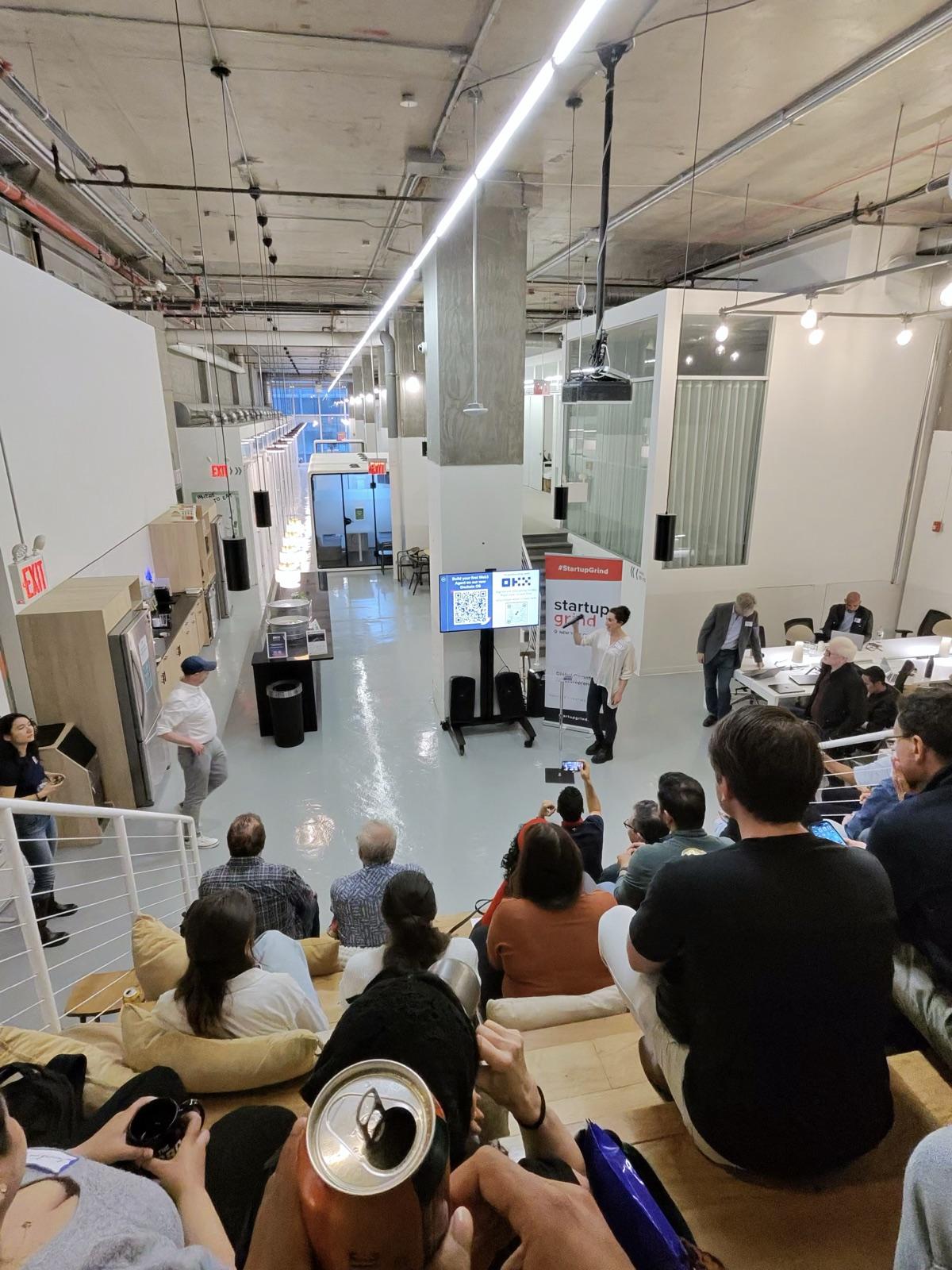
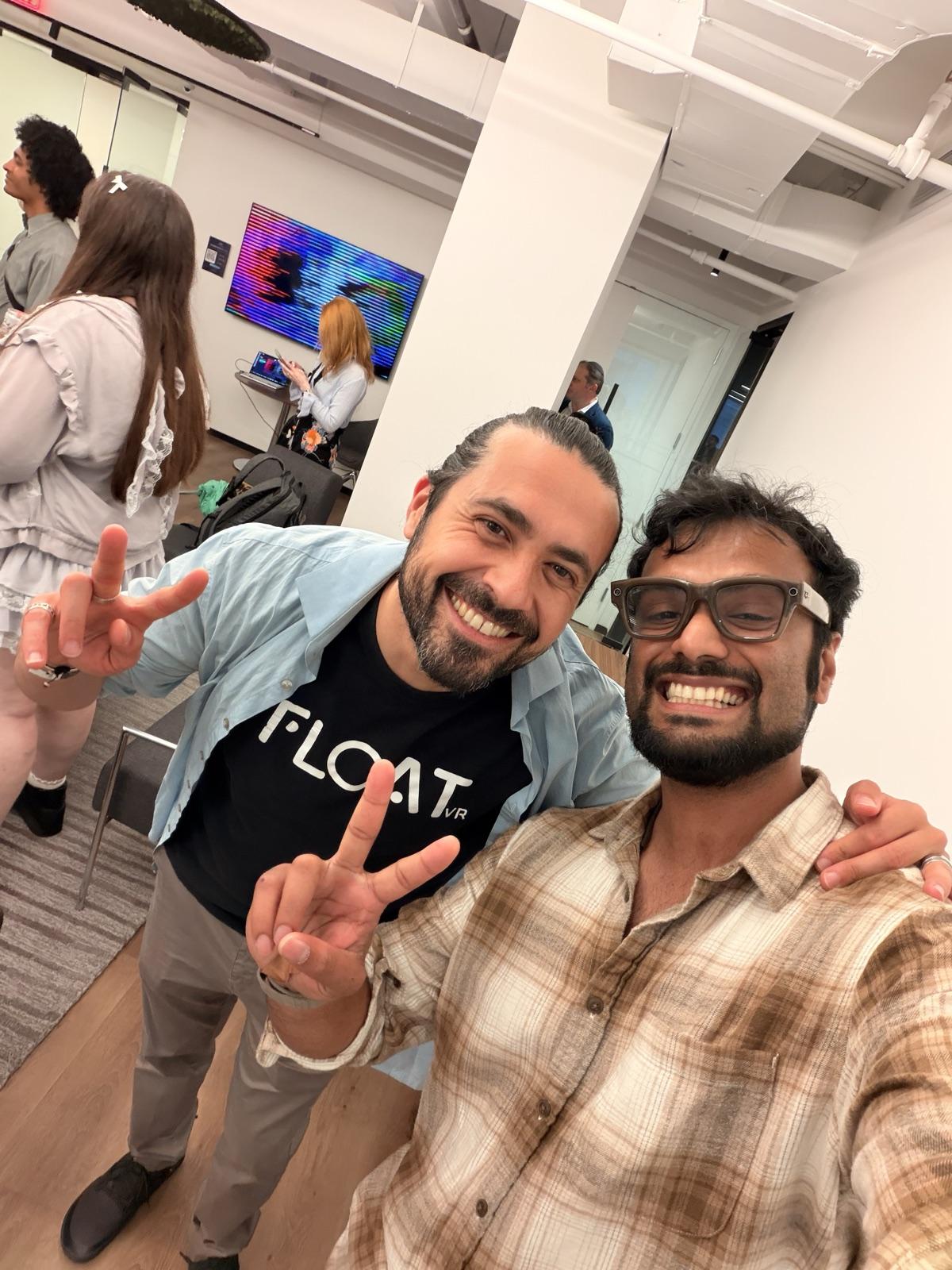
The events themselves became a rhythm: meetups in New York, invited events, and one very good discovery that the best way to see a city is to run through it with its running clubs. One evening I ended up talking to the founder of FloatVR, the very application I had built on for my Zenflow study. Small world, large city.
Over time the repetitive tasks crystallised into skills: written procedures the agents share, so anything I have done twice becomes something I never do manually again.
The deeper shift is presence. Almost everything above could technically be done with a phone. But a phone demands that you stop, take it out, and be present with the phone instead of with what you are doing. With the glasses I can be picking through groceries, spot something on sale, ask what I could make with it, and get an answer without breaking stride. The tool disappears into the activity. That, more than any individual feature, is the thesis I am betting the company on.
The parts that are not in the demo video
It would be dishonest to end there, so here is the other column of the ledger.
The system hangs. Not often, but always at the worst moment, and when your workflow lives in your glasses, a hang does not mean a spinning cursor; it means you are standing in a hardware store mid-task with no fallback. The Neural Band, which handles menu navigation through wrist gestures, is great when it works and genuinely frustrating when it misreads you. My one wish is that this tech gets more precise, because the gap between almost-reliable and reliable is the gap between a demo and a life.
There is also the matter of wearing a camera on your face in a big city. The blinking light makes people curious, and most of the time that is lovely: I explain, show a small demo application I made for exactly this, or fall back to the Meta AI demo, and it turns into a real conversation. But in crowded parts of New York it makes you a target. I took to wearing a cap in busy places to hide the profile of the glasses. One evening in a New York park a man closed distance on me fast enough that every instinct said mugging; I stood up from the bench and walked away as quickly as I could without running. Nothing happened. But I plan around it now.
And then the quiet one: loneliness. Agents are great companions in the sense that they are always available and never tired of you. But they are predictable. Meeting people at events, hearing their stories, being surprised by a stranger: no agent does that. There were days on the road where my only interaction was with an agent, and I would not recommend that to anyone. The stack multiplies what you can do. It does not keep you company.
Next post: what all of this actually shipped. Three products, an open-source project, and an idea from an ex-SpaceX engineer that I am still chewing on.
Vanlife with Agents: What the Road Shipped