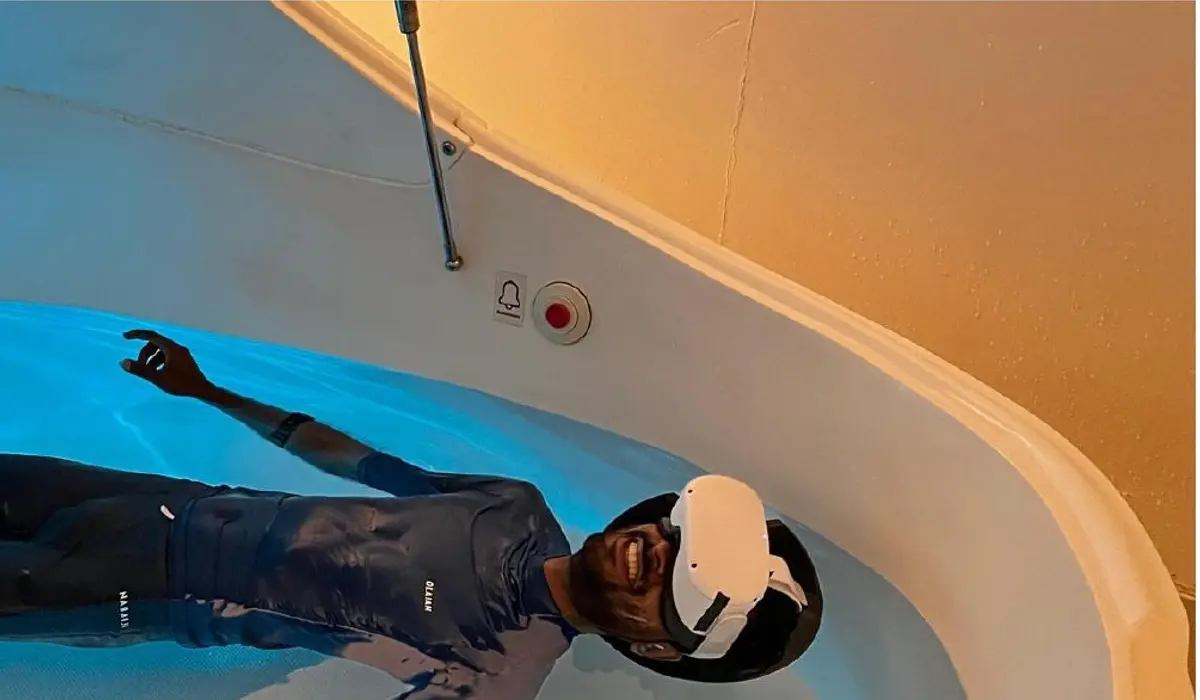
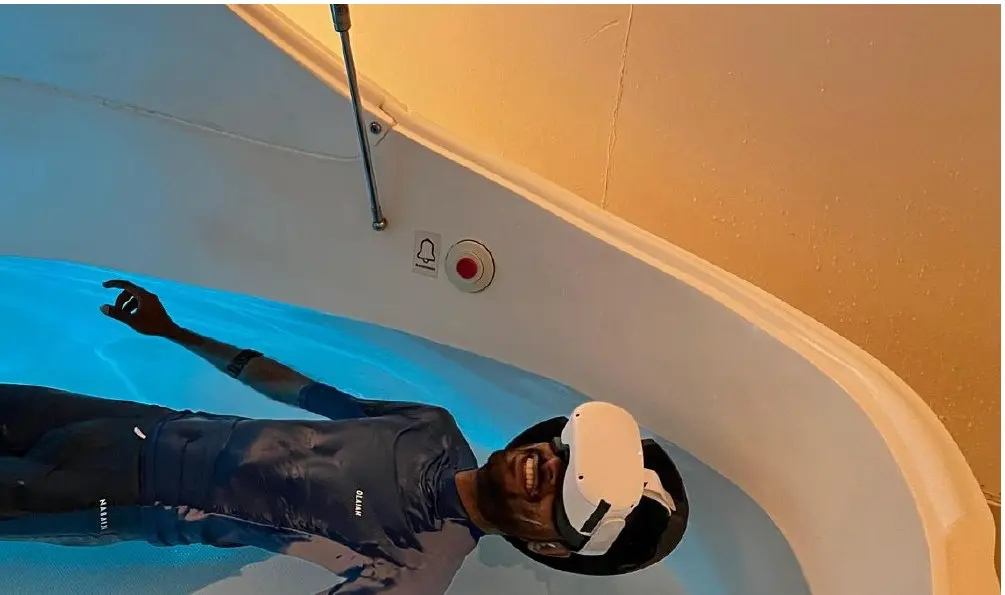
I did not go looking for customers. A float club in Singapore watched us run a study in their tank and asked whether we could build them something.
Most startup stories begin with an idea that goes looking for a customer. Mine went the other way round, which I now think is the only reason it went anywhere at all.
In 2024 I was part of a study on using extended reality to help people who are afraid of being in water. The setup sounds absurd written down and works beautifully in practice: you float in a flotation tank, in warm salt water dense enough to hold you up without any effort, wearing a headset that puts you in a playful water-inspired world. Real water for the body, virtual water for the head. The work was led by Maria Montoya with Hannah Qiao and others, and it ended up at CHI 2024.
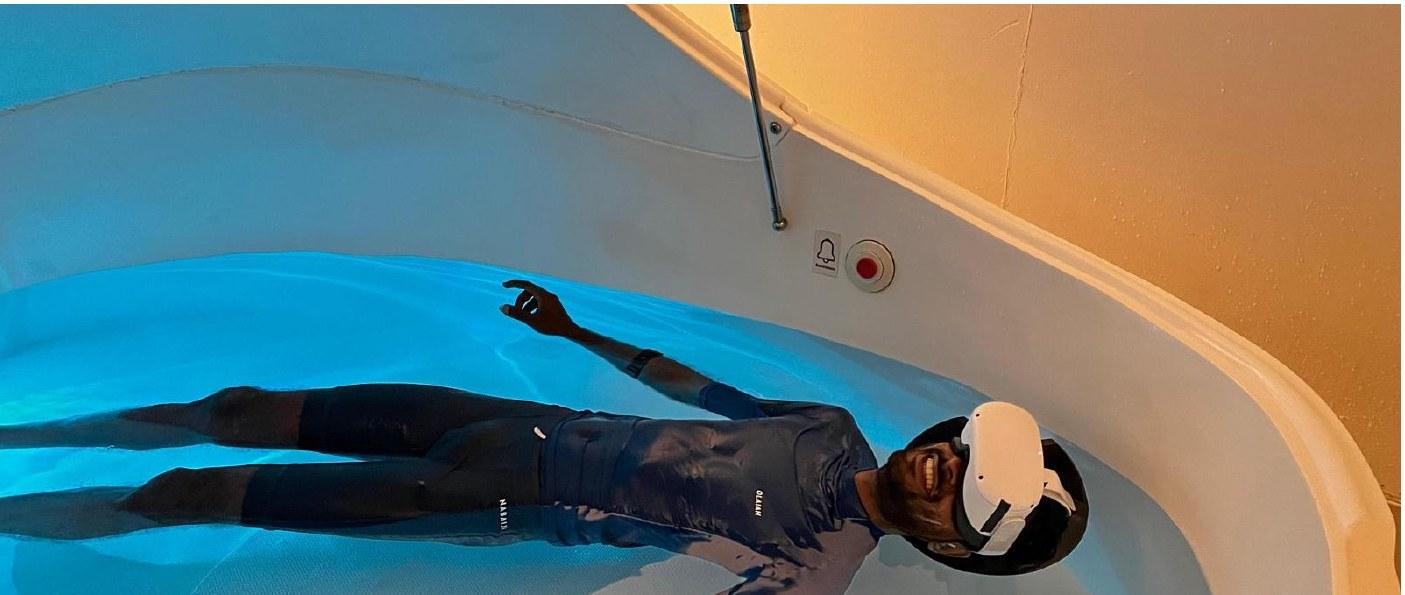
The study needed a real flotation tank, so we ran it at Palm Ave Float Club here in Singapore, whose director and staff put up with a research team occupying their tanks for weeks.
At some point during all this they asked whether we could build VR experiences for them. Not as a favour, and not as research. As something they would want to buy. And then they did the thing that changed it from a nice conversation into a data point: they put it in writing.
That letter is why FlowsXR exists. Hannah, Suranga and I had all separately wondered whether any of this work could leave the lab, and a written expression of interest from someone who had actually seen the thing running is a very different object from a hunch. Hannah and I ended up co-founding the company.
The accelerator taught us two things we did not want to hear
The idea we developed became Zenflow, which gradually turns your room into a night sky while guiding your breathing. We took it through GRIP, the entrepreneurship programme at NUS.
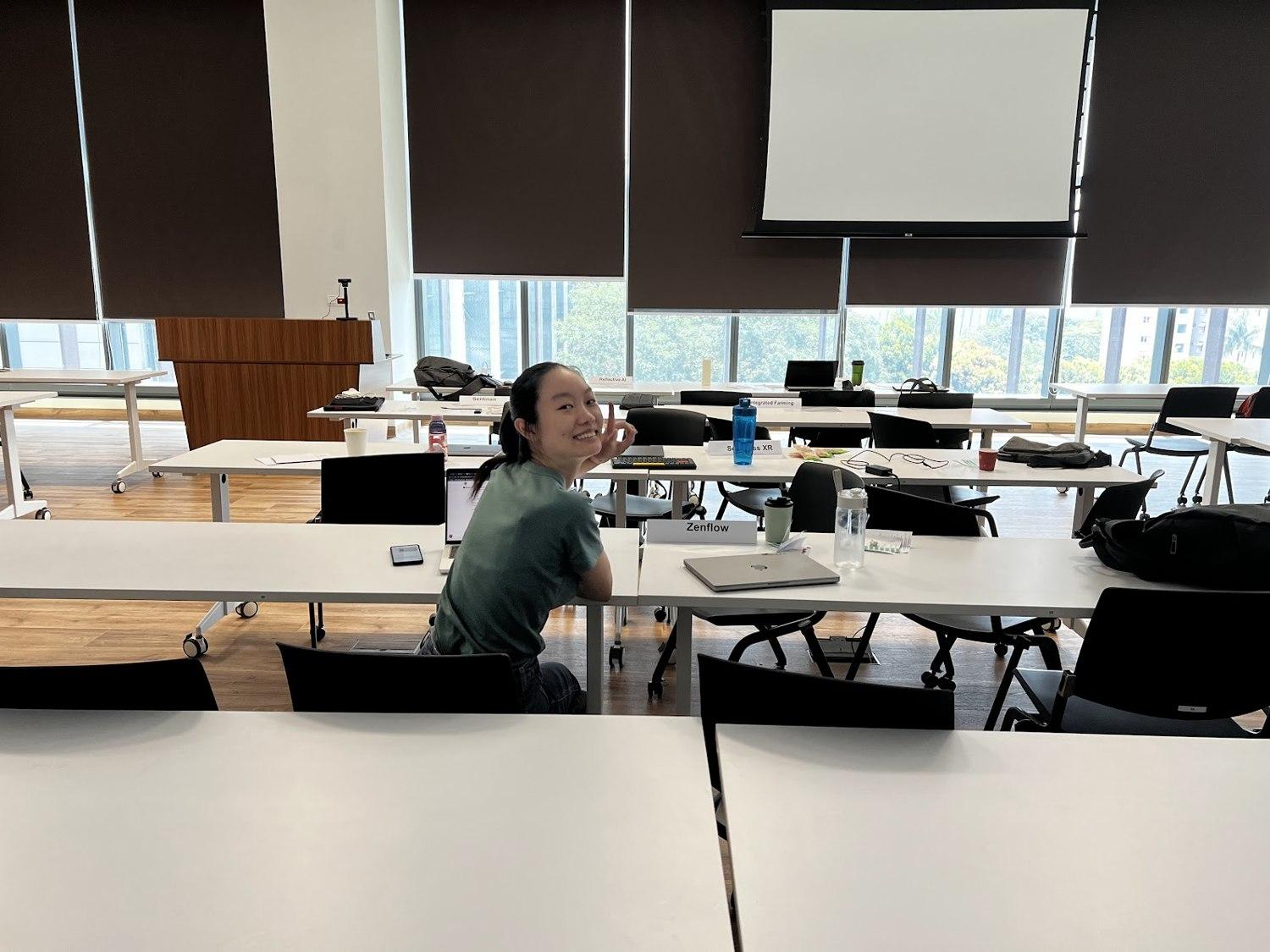
Two lessons came out of that, and neither was the one I was hoping for.
The relaxation market is not big enough. We went in assuming that the size of the wellness category meant the size of our opportunity, and the programme made us actually look. Building a company solely on VR relaxation would be tricky. That was unwelcome, and it was much cheaper to learn it in a structured programme than after two years of building.
You cannot be a part-time founder. This is the one that determined everything that followed. I was doing research full time and a company in the gaps, and the honest assessment is that this does not work. Not because the hours do not add up, though they do not, but because the two modes of thinking are different and switching between them costs more than the time it takes.
There is a nice inversion in what happened to the product. Normally research gets commercialised. Zenflow went the other way: we built it as a commercial idea, discovered the market was not there in the shape we wanted, and it became a CHI 2026 paper instead. It is a good paper. It is not a business, and knowing the difference took the accelerator.
The tangents were the useful part
Being told your market is too small sends you looking for other places the technology might land, and GRIP pushed us hard down that road. Most of those tangents went nowhere, which is the point of tangents.
One I still like is using VR to teach sign language. Roughly 70 million people use a sign language as their first language, and learning one is bottlenecked on getting time with a fluent signer who can watch your hands and correct them. A headset already tracks hands precisely enough to tell you when you have formed a sign wrong.
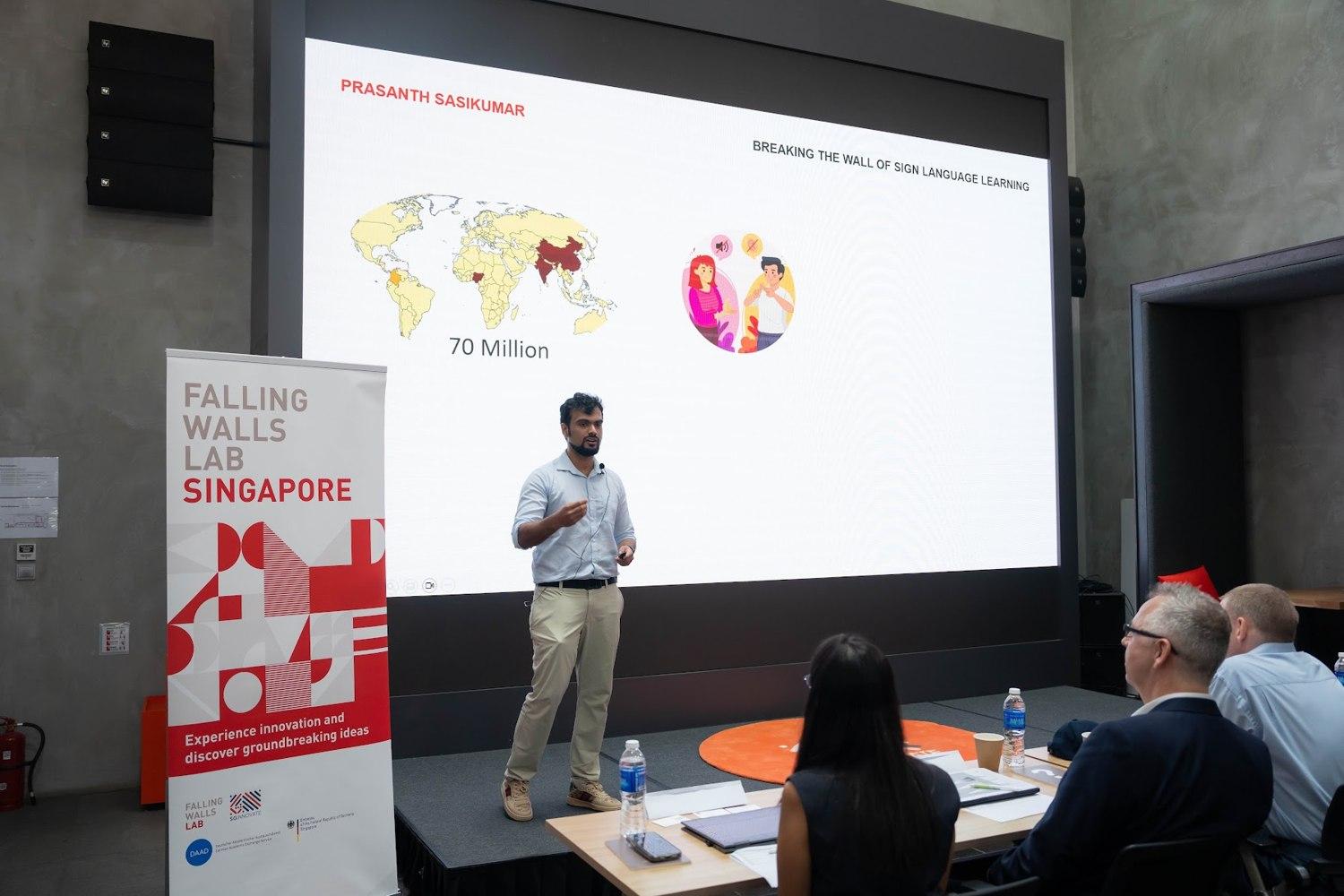
I took it to Falling Walls Lab Singapore on 4 September 2024, where you get three minutes to explain an idea to a room of judges. Three minutes is a brutal and useful format. It does not let you hide behind a demo.
That project is not the company either. But going looking for it is how I stopped thinking of the technology as a relaxation product and started thinking about where else careful hand and body sensing is worth money, which is most of what FlowsXR does now.
Then I left for four months
In early 2025 I got on a motorcycle and rode across India, Nepal and Bhutan. Eighteen thousand kilometres, four months, twenty-eight states. That trip has its own writeup and it does not need me to justify it here.
I will say that it sits in the middle of this story for a reason. I had just been told, correctly, that I could not do both things properly at once, and I was not yet ready to choose. Riding for four months is not a decision-making framework. But I came back knowing which way I was going.
Making it formal
So this month I set the company up properly. FlowsXR exists on paper.
The name had been out in the world for a while before the paperwork caught up with it. At the EdTech Asia Summit earlier this year I was handed a badge with my name on one line and the company's on the next, which is the first time I had seen the two printed together by somebody else.
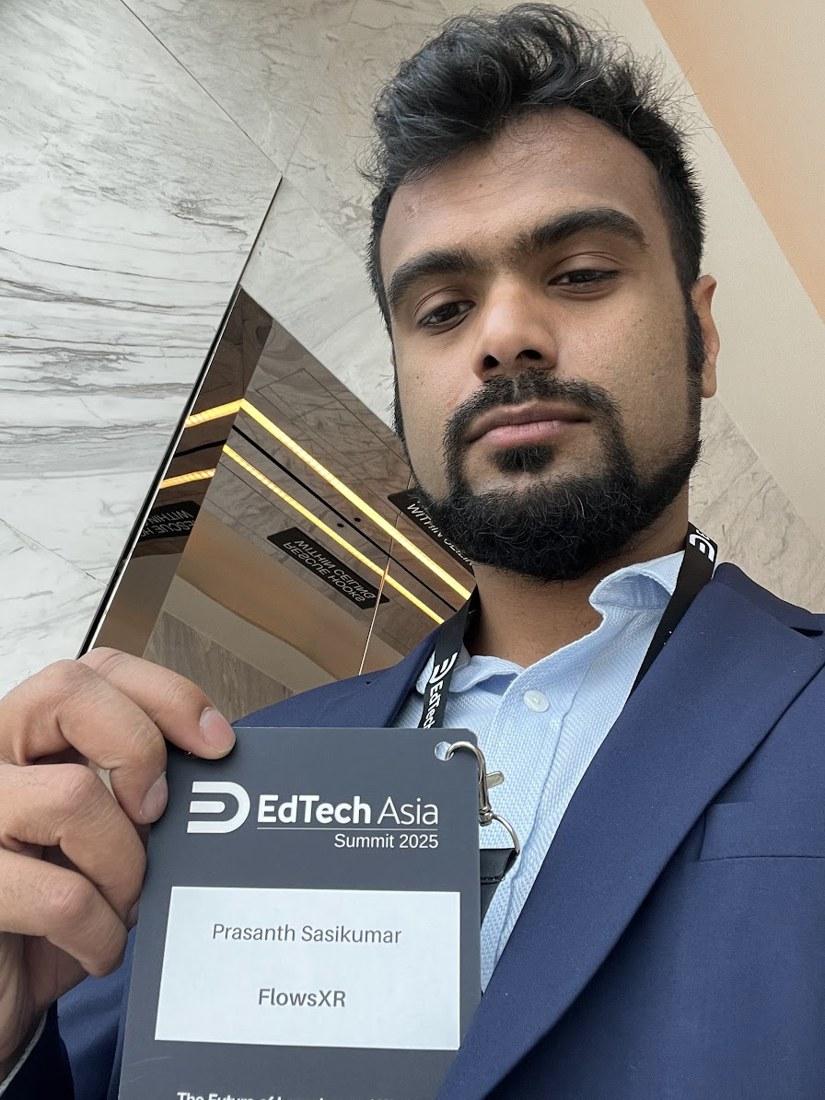
It is a laminated rectangle produced by a conference registration desk and it has no legal standing whatsoever. It still felt like more of a milestone than the incorporation documents did.
Then came the part nobody explains properly, which is how this works if you are not a citizen. As a foreigner in Singapore you do not apply for permission to go and start a company. You incorporate the company first, and then the company requests an EntrePass from the government on your behalf. The entity you have just created is the thing that sponsors you to work at it.
That inversion took me a while to get my head around. You are asking the state to let you work for an organisation that exists only because you made it exist a few weeks earlier, and the paperwork treats that as completely normal.
Update, March 2026: the EntrePass was granted.
It was not a clean jump
Every version of this story I have read involves someone quitting on a Friday and starting on the Monday. Mine did not.
NUS has been generous about the transition and is keeping my employment going for a few more months, because we have live industry collaborations running with Meta and with Asahi that are worth finishing properly. So there is overlap, and there is runway, and I am not choosing between a salary and nothing.
I think that matters to say out loud. The riskier path is real, but it has been made survivable by people being reasonable about timing. Not everyone gets that, and pretending I leapt off a cliff would make for a better story and a worse piece of advice.
The company is entirely bootstrapped. No investors, no funding round. When the university work finishes, I will be the only full-time person in it.
How is it going
Genuinely too early to say. The ink is barely dry.
I do not know yet whether this will work, and anyone who tells you at this stage that they know is describing a feeling rather than a fact. Ask me in two years.
What I can report is that I am enjoying the process, which is not nothing, and which I did not entirely expect. The part-time version was exhausting in a way that was mostly about divided attention. Committing to it properly is harder in absolute terms and much easier to be inside.
If you are weighing something similar, the one thing I would carry over is the beginning. Not the accelerator, not the incorporation, not the visa mechanics. The letter. Find out whether somebody who has seen your thing actually wants to buy it, in writing, before you rearrange your life around it. Everything after that was logistics.
The company lives at flowsxr.com. If you are building something where a headset needs to understand what a person's hands or body are actually doing, I would like to hear about it.