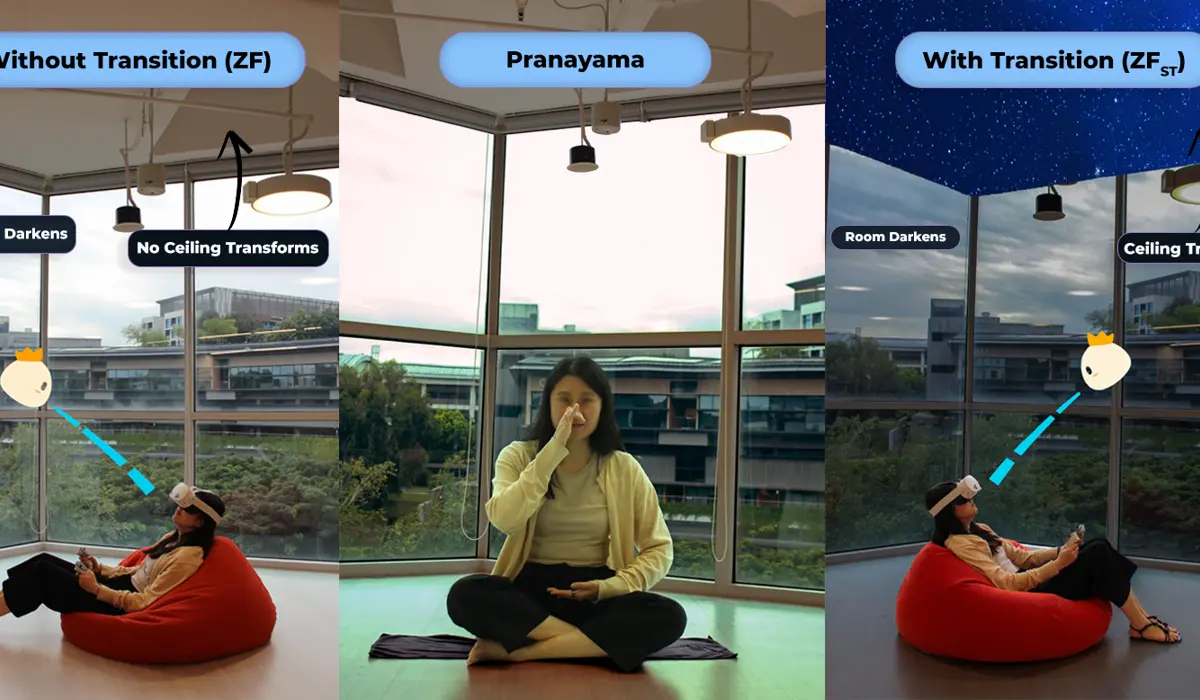
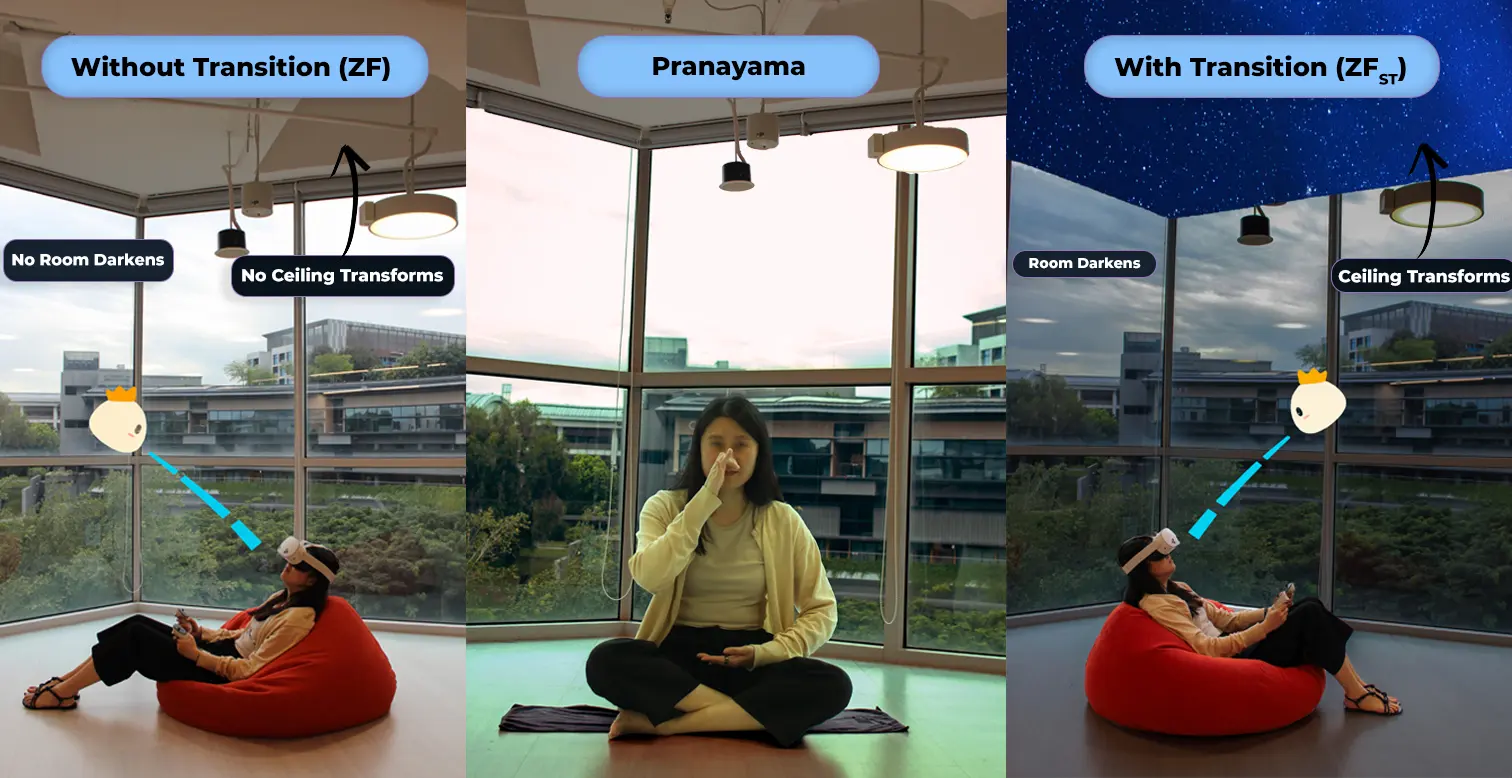
An MR system that gradually turns your room into a starry night sky, co-designed with pranayama practitioners.
Stress and poor sleep are two of the most common complaints we hear about, and traditional relaxation practices like pranayama (breath-control exercises) work, but they require guidance, discipline, and a quiet environment that's often hard to sustain. VR relaxation apps exist as an alternative, but dropping someone straight into a fully virtual world can feel abrupt and disconnected from the gradual, embodied nature of meditative practice.
We wanted to see if the way you transition into an immersive experience matters as much as what's inside it. That question became Zenflow, an MR system that blends subtle visuals and breathing cues to gradually turn your real surroundings into a restorative virtual space, instead of just replacing them outright.
Co-designing with the people who actually teach this
Rather than guessing at what makes a relaxation experience work, we ran three 90-minute co-design workshops with five practitioners who teach pranayama professionally, including two clinical psychologists, a neuropsychologist, and two counselling psychologists, averaging 8.4 years of clinical experience between them.
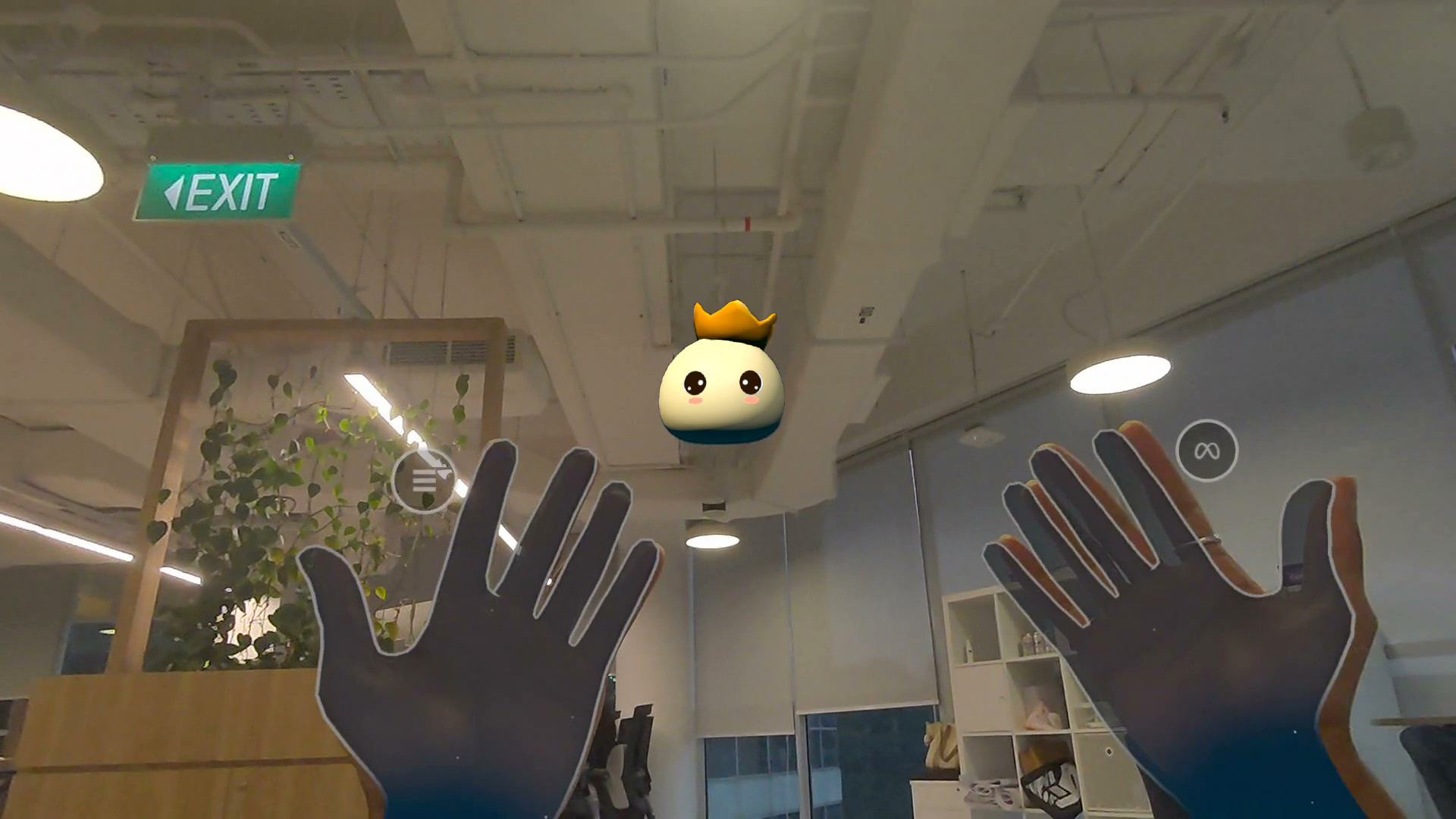
A few of their calls shaped the whole system:
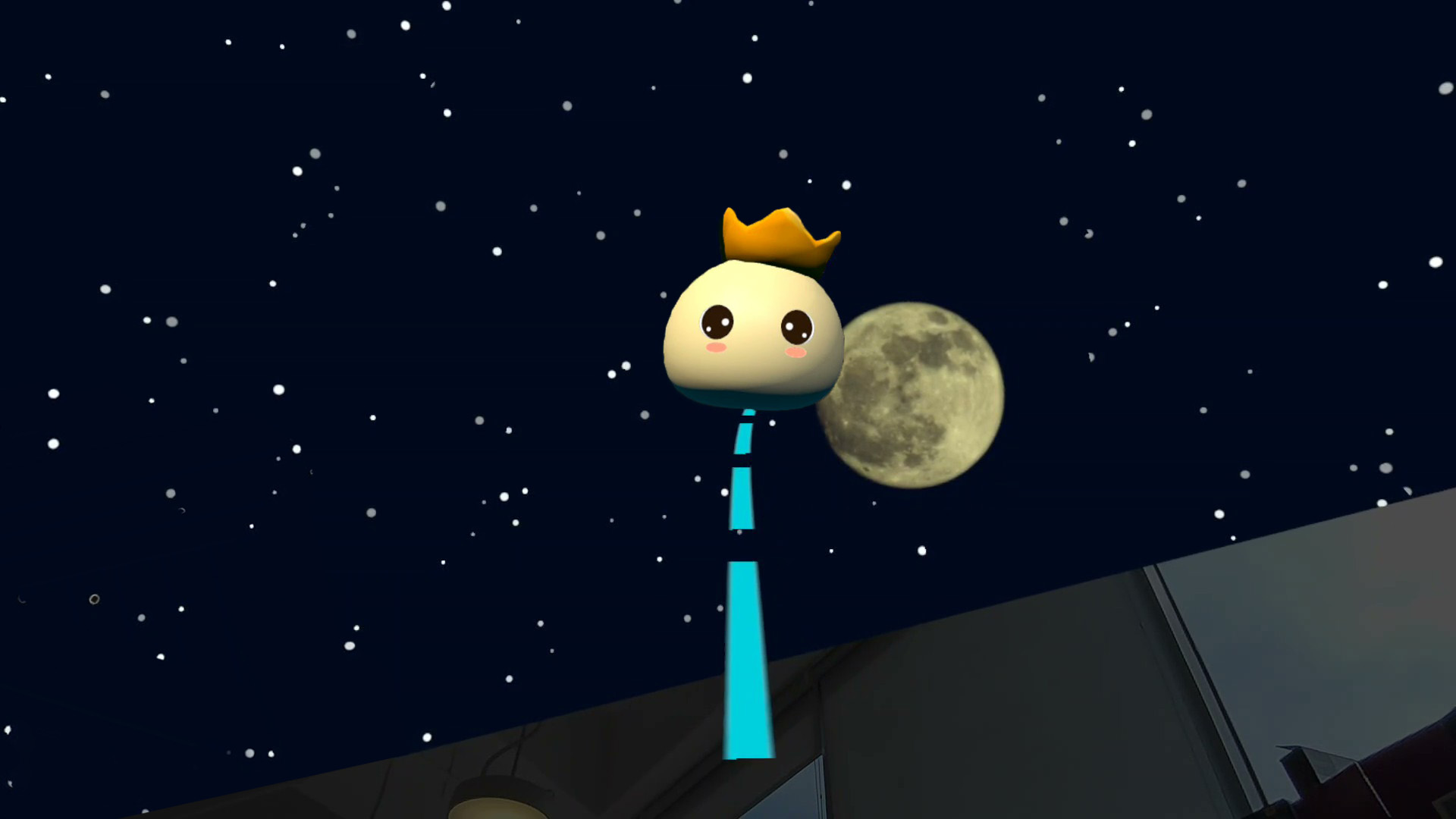
- Night sky over forest or sunrise. We discussed nature scenes first, but the practitioners flagged real risks: enclosed forest canopies can trigger claustrophobic responses in trauma patients, and sunrise imagery reminded some patients of the workday ahead. A starry night sky, on the other hand, felt gentle, universally calming, and tied to when cortisol naturally drops.
- No human-like guide. Early on we considered a mouth-animated avatar to mirror the user's breathing. The practitioners pushed back hard, worried a human-like presence could feel judged or socially distracting, especially for anyone dealing with social anxiety or depression. We landed on a small glowing orb instead: present, but never commanding, like "a peripheral nervous system extension."
- Breathing guidance without instructions. Rather than telling users how to breathe, we built a simple pair of lines that slowly expand and contract at a calm, steady rhythm. Users can sync their own breath to it or ignore it entirely, no on-screen text, no voice prompts.
Making the transition itself the intervention
The technical core of Zenflow is the room transition. Using Meta's Mixed Reality Utility Kit (MRUK) on a Quest 3, the system scans the room for the ceiling, then applies a custom shader that gradually reveals a virtual night sky, starting from the center and expanding outward, timed to a specific point in the breathing guidance sequence. The Scene API keeps occlusion correct throughout, so if something physical passes between you and the glowing guide, it still looks right.
Does the transition actually help?
We tested two versions of Zenflow, one with the gradual environmental transition (ZFST) and one without it (ZF), against traditional Pranayama practice, in a three-week within-subjects study with 12 office workers. Each condition ran for a full week, with self-reported stress and sleep questionnaires (PSS-10, Leeds Sleep Evaluation Questionnaire) and objective data pulled from a Garmin Venu 3s worn every night.
The transition mattered. Zenflow with the gradual environmental shift led to significantly better self-reported sleep quality and better objective stress and sleep scores than the version without it, and held up well against traditional Pranayama, too. The main takeaways for us:
- How you transition into an immersive space is a design variable in its own right, not just an implementation detail, it measurably affects relaxation outcomes.
- Co-design with clinical practitioners early surfaced real risks (trauma triggers, uncanny-valley guides) we wouldn't have caught by iterating alone.
- Restraint was the feature. No instructions, no anthropomorphic guide, no jarring cuts, just a slow, embodied shift users could opt into at their own pace.
You can read the full paper, Zenflow: Investigating MR Transitions for Enhancing Sleep and Relaxation, from CHI 2026.