

Six months of bed rest after ACL surgery, a Pinterest habit, and a Magic Mirror: the first thing I built that felt like real-world augmented reality.
The backstory starts in a tuition class, when a friend mentioned a project called "Sixth Sense", a gesture-based computing demo created by an inventor from India.
As a Computer Science undergraduate (though automotive engineering was always the real interest), the idea of replicating "Sixth Sense" stayed in the back of the mind. In the final year, there was a plan to tackle it as the main project. By then, the basics of image processing with OpenCV and Matlab were solid. An academic advisor counseled against such a complex scope, so the project shifted to an Android file-encryption app instead. After graduation, work at an MNC took over and the idea faded.
In August 2016, a leg injury during a football match led to an ACL replacement surgery and a six-month bed rest. With time to fill, endless Pinterest scrolling landed on "Magic Mirror", the closest thing to "Sixth Sense" that could be built at home.
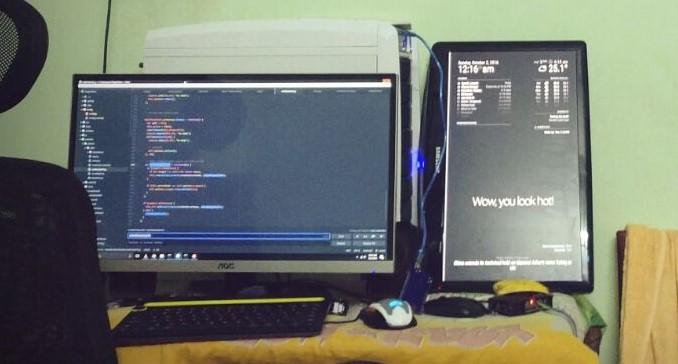
On a September evening, the MagicMirror GitHub repo was cloned and Node.js and JavaScript became the new focus. The well-documented getting-started guide had everything up and running on a Windows machine within a couple of hours. After seeing the UI come to life, a Raspberry Pi 3 and a set of sensors (motion, ultrasonic, temperature and humidity) were ordered from Amazon.
MagicMirror: Creating Custom Modules