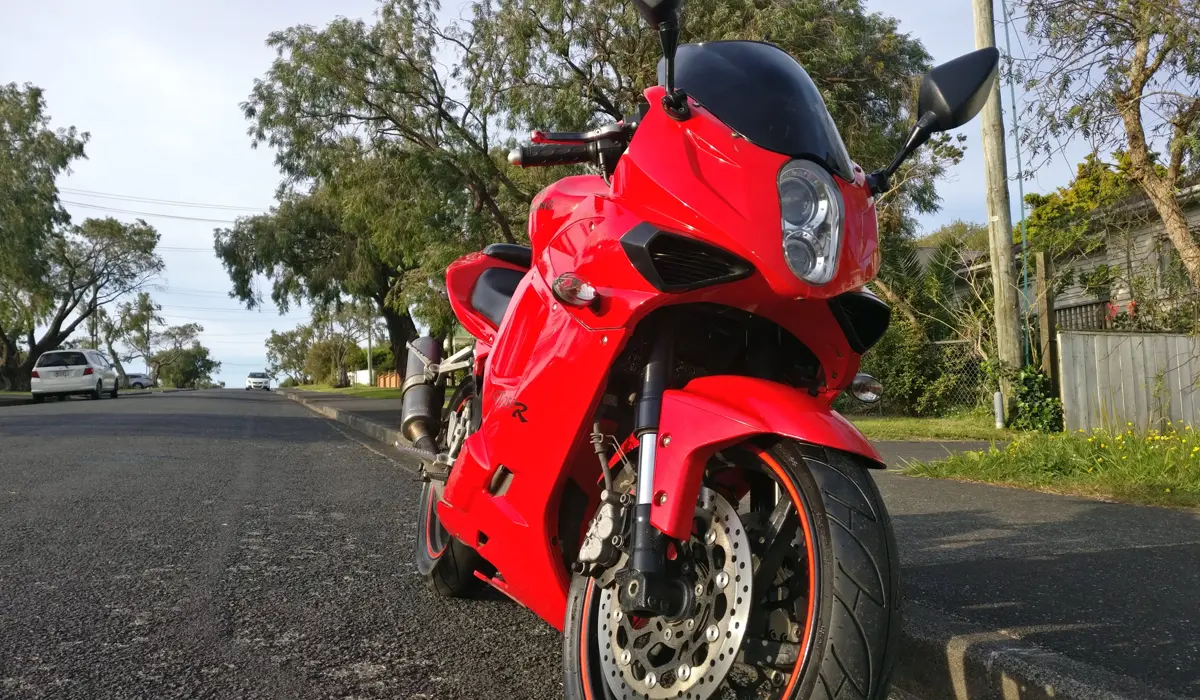
How to have expensive fun with no money. Two auction wrecks, an engine crane doing a job it was never sold for, and a road-legal 250 that cost nothing.
Here is the tension at the centre of being a student with an expensive taste in hobbies. The fun stuff costs money. You have no money. The standard advice is to want less, which is terrible advice, so the alternative is to get very good at the gap between what something costs and what it is worth.
I have run this play a few times. Flipping cars paid for skiing and surfing and a lot of road trips. This post is the cleanest single example of it: how I ended up with a motorcycle that cost, on the final accounting, nothing at all.
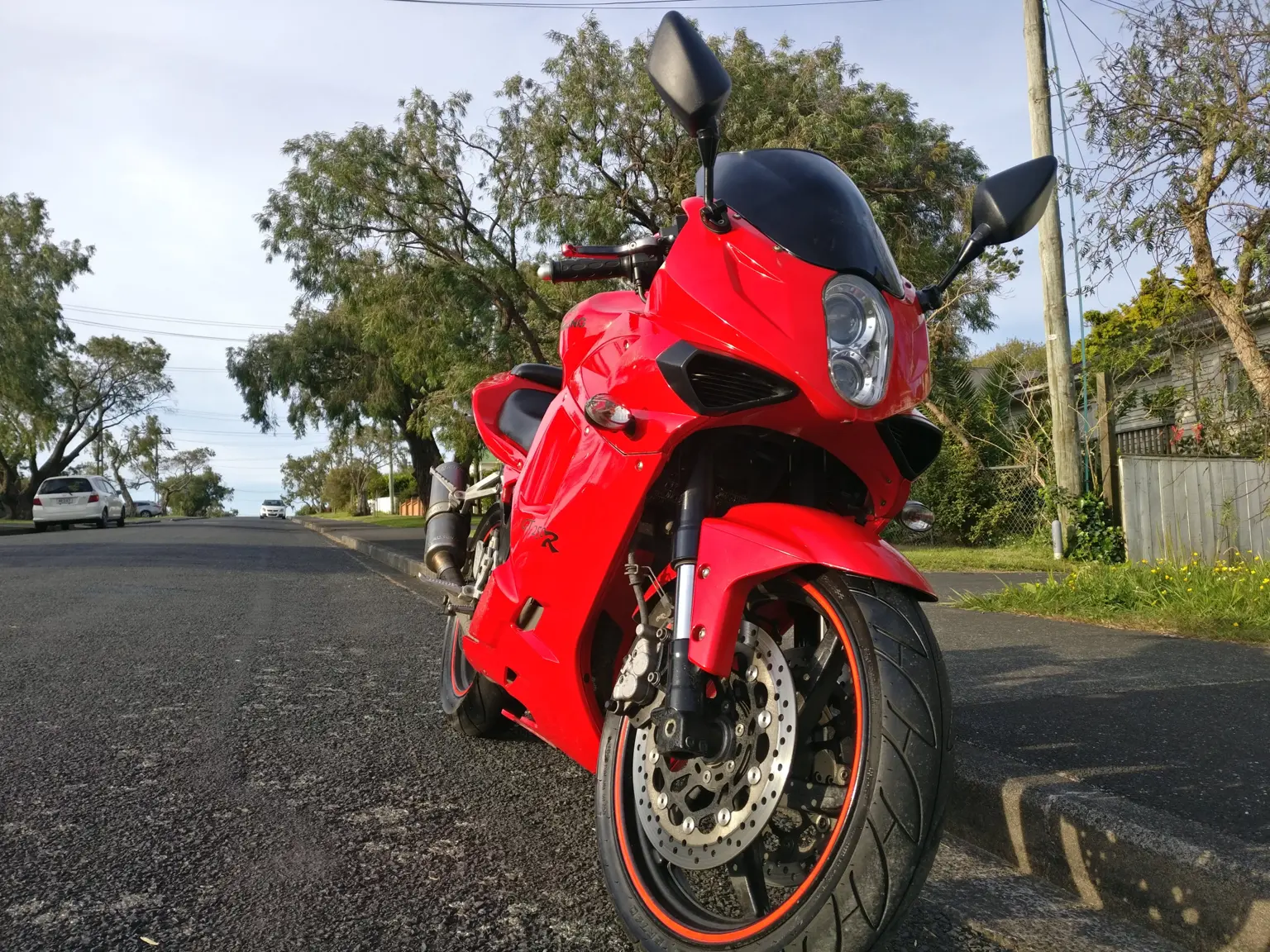
The bike is a Hyosung GT250R. The point is not the bike.
 The end state, put first, because otherwise the middle of this story is quite alarming.
Hack 1: buy the problem nobody else wants
Insurance auctions are full of vehicles that are mechanically excellent and administratively cursed. A bike gets stolen, gets recovered, and the insurer has already paid out. It is now a perfectly good motorcycle that happens to be de-registered, which in New Zealand means it is not legally a vehicle any more. It is a very heavy sculpture.
Most buyers scroll straight past those, because getting one back on the road means inspections and paperwork and a real possibility of failure. That aversion is the discount. I bought a well-specced GT250R for very little precisely because its problem was bureaucratic rather than mechanical.
The trick throughout is being honest with yourself about which problems you can actually solve. I am fine with paperwork and reasonable with a spanner. I am not fine with a bent frame. So: buy bent paperwork, never buy bent metal.
Hack 2: buy the second problem too
This is the part where people's faces change.
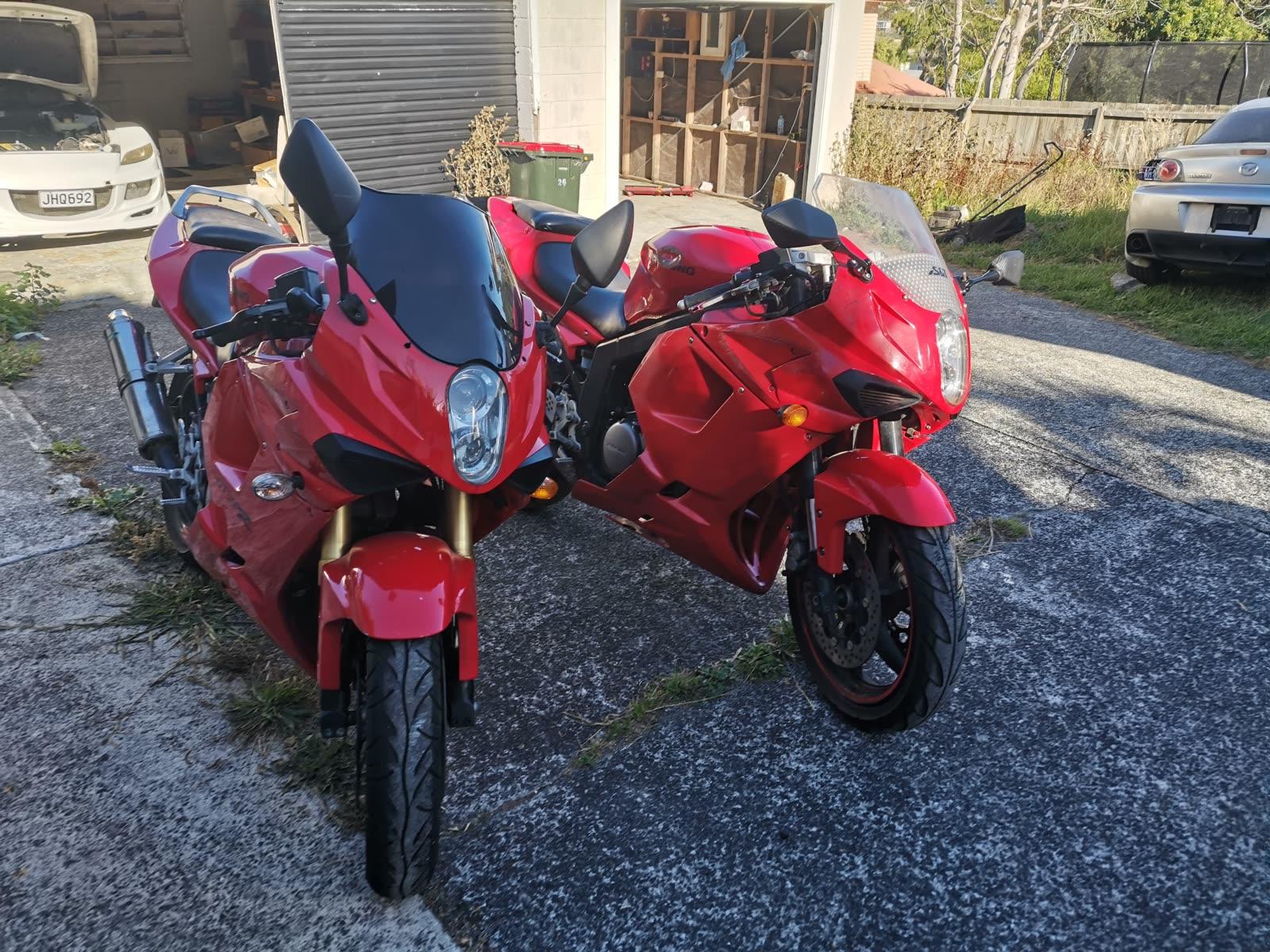
A second GT250R came up a couple of hours away, in visibly worse condition but with one critical asset: a live registration. On the way home with it on a trailer, I stopped at a wrecker and picked up a registered frame as well.
So now I owned two motorcycles and a spare frame, none of which I could legally ride. My flatmates had opinions.
 Two bikes, one bare frame, and the calm before a great deal of disassembly.
The logic is simple even if the garage did not look it. A motorcycle's legal identity lives with the frame. Everything else, engine, forks, wheels, brakes, bodywork, is just parts. Good parts attached to a dead identity, plus a live identity attached to tired parts, is not two broken bikes. It is one good bike that has not been assembled yet.
Hack 3: an engine crane is a motorcycle stand
Somewhere in the middle of this I worked out the most useful thing in the whole project, and it is worth the price of admission on its own.
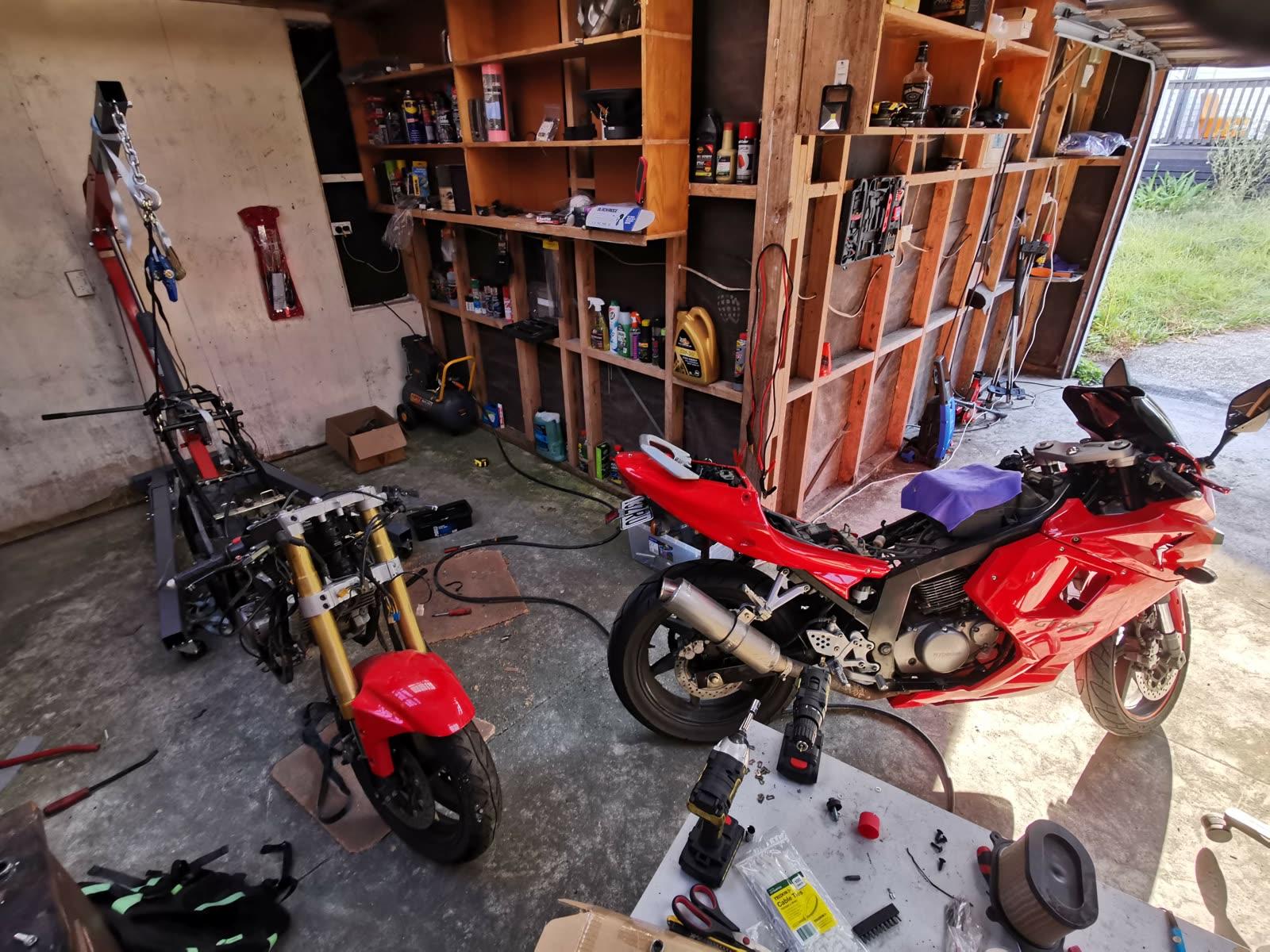 The crane on the left, doing a job no product page has ever advertised.
A proper motorcycle lift is expensive. An engine crane, the folding hydraulic thing for pulling motors out of cars, is cheap, extremely common secondhand, and will happily hold a stripped bike at whatever height you want. Better than a lift, in fact, because you can hoist a frame with no wheels, no forks and no engine in it, which is exactly the state everything spends most of its time in during a swap. A bike with nothing attached will not stand up by itself, and holding it up with one hand while doing something useful with the other is not a plan.
Sling it, lift it, walk around it. It also puts the work at standing height, which your back will bring up with you later in life.
Hack 4: strip it once, properly
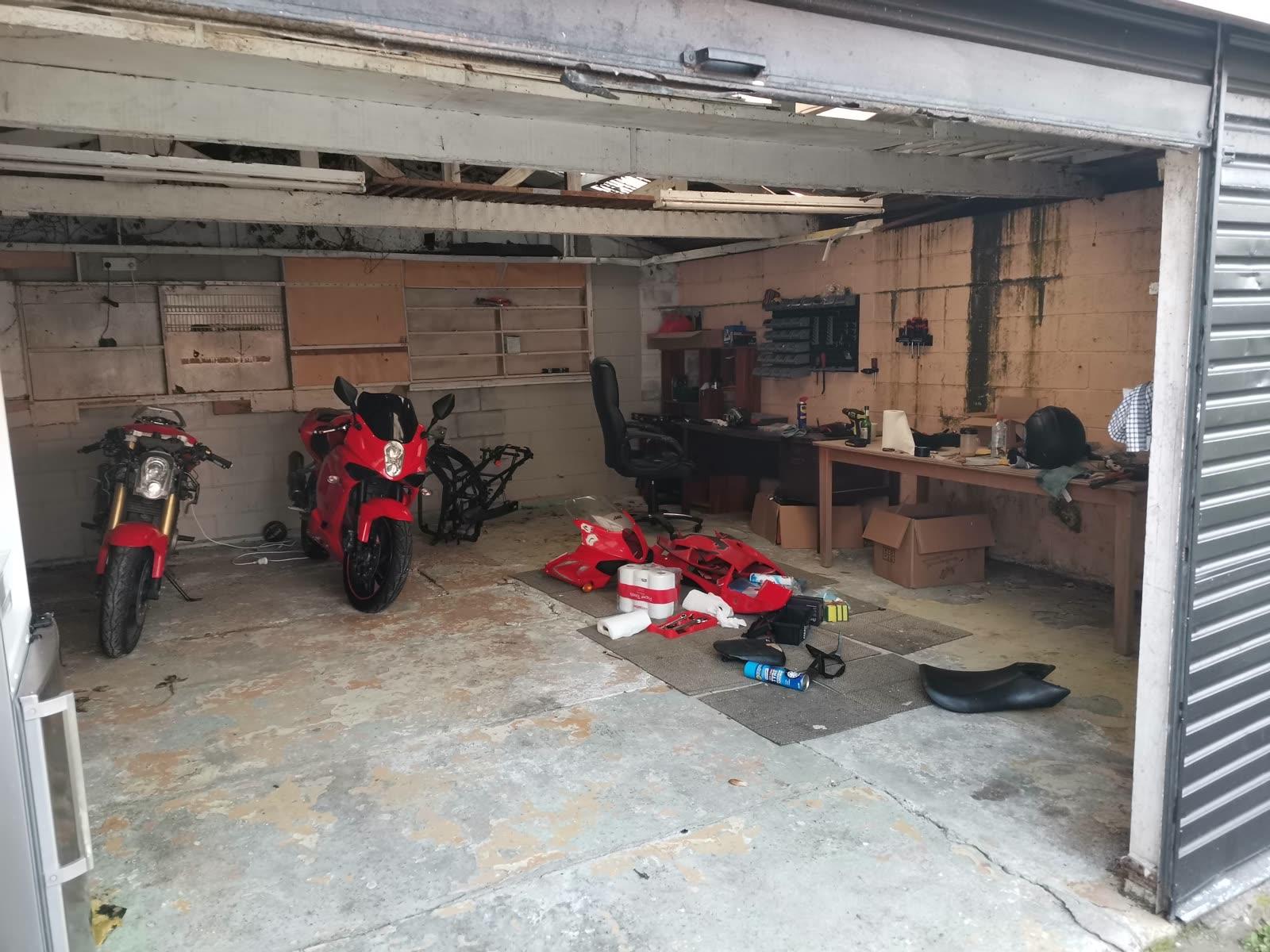
There is no clever shortcut for the swap itself. Every part comes off the good bike and goes onto the live frame. Bodywork, loom, engine, suspension, brakes, the lot.
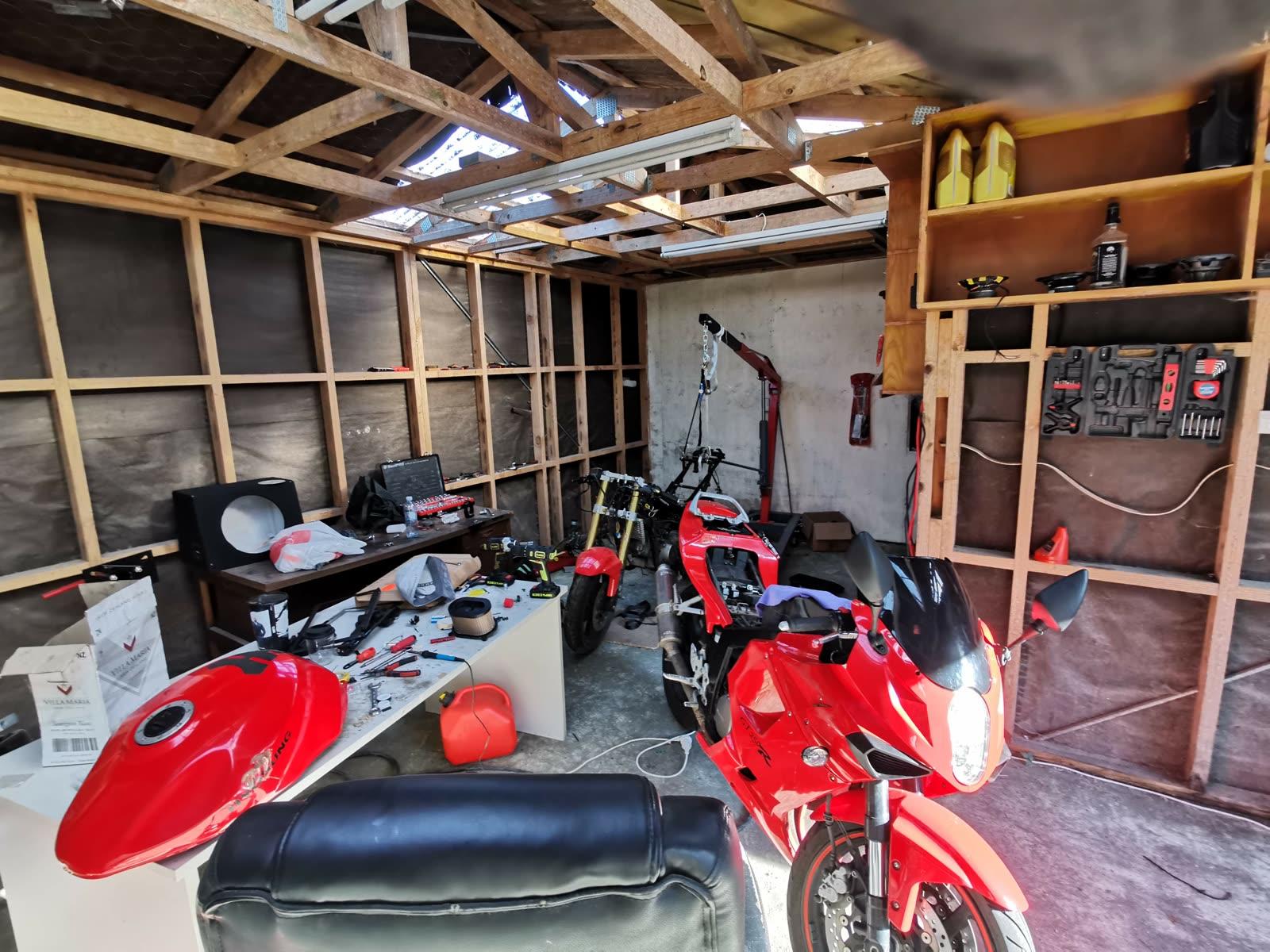 The point in every project where you become certain you have made a serious mistake.
The one discipline that matters: bag and label fasteners as they come off, immediately, every time. It feels slow and fussy and like something a more organised person would do. Then you get to reassembly and it is the only reason the bike goes back together in a weekend instead of over a month of trips to the fastener shop.
The engine going back in is the moment it stops being a pile of parts.
Hack 5: the exit is part of the plan
Both bikes then needed a WOF, New Zealand's annual safety inspection. Neither had one. I moved the good parts across, took that bike for its inspection, and it passed. Then I did the same for the second bike, and it passed too.
Two warranted, road-legal motorcycles.
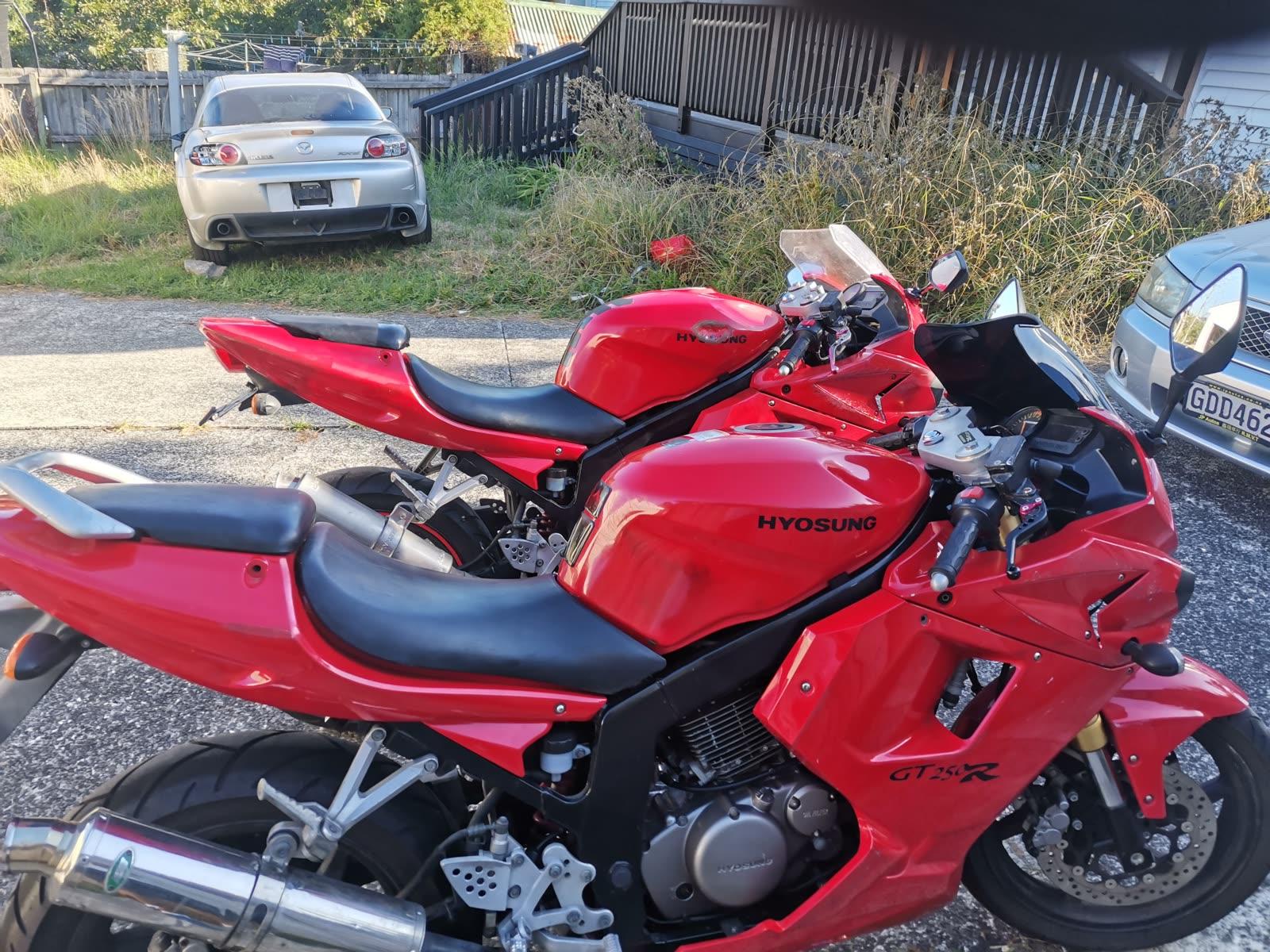 Both of them, done.
I sold the average one at a fair price with every fault disclosed in writing, and that single sale covered the cost of buying both bikes in the first place. Which left the good one. Free.
The disclosure part is not me being noble, it is the actual mechanism. You get to do this repeatedly because people trust you the second time, and the fastest way to kill a hobby that funds itself is to sell somebody a problem you knew about.
The ride
This is what the whole exercise was for. Sixty seconds through Auckland traffic on a bike that cost nothing.
Originally posted on Instagram.
The general version
Strip the bike out and the pattern underneath works for a lot of things:
- Find the discount that is administrative, not physical. Paperwork problems scare people off far more than they should. Fixing paperwork is tedious, not hard.
- Buy the second broken one. Two incomplete things frequently contain one complete thing. True of bikes, cars, and MacBook USB-C ports.
- Rent the specialist tool's job, not the tool. The engine crane was never marketed as a bike stand. Ask what a tool physically does rather than what it is called.
- Plan the sale before you start. The project pays for itself only if something leaves at the end. If nothing leaves, you do not have a hobby that funds itself, you have a garage full of projects. Ask me how I know.
- Be scrupulously honest on the way out. Reputation is the working capital.
There is a footnote to all this that I enjoy more than I should. A 2008 GT250R engine later turns up in my PhD work on volumetric training, as the assembly task participants learned to service in mixed reality, with the procedures lifted straight from the service manual. The cheap bike had a second career as laboratory equipment.
Not bad for something that started as two wrecks and a stubborn refusal to pay retail.